
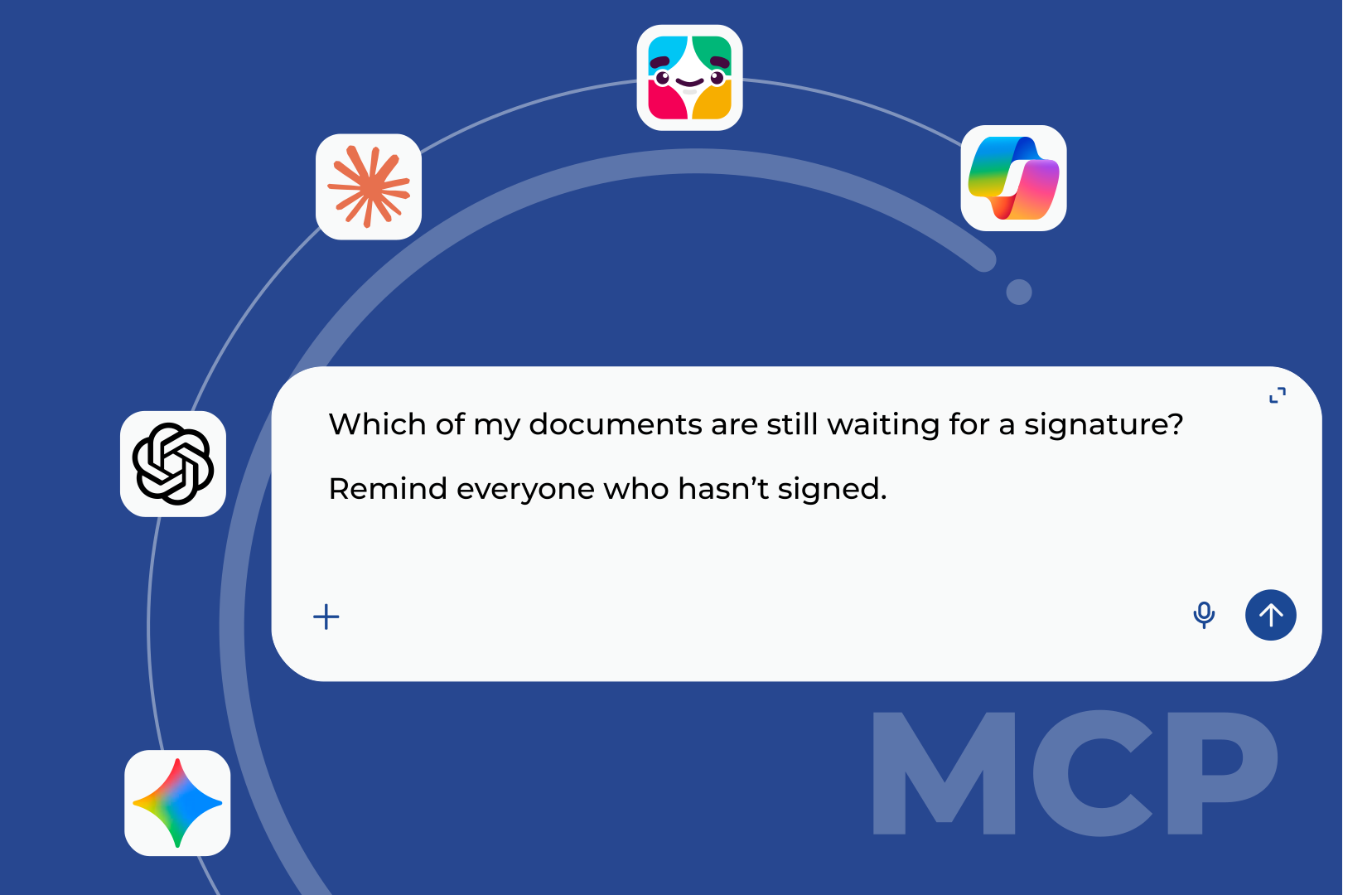
What can you do with Scrive MCP? 7 practical ways to work with agreements
See what you can achieve by connecting Scrive to your AI agent of choice (e.g. Claude, ChatGPT), with our open source MCP server.
Read article
For years, European organisations have navigated a complex tension: the desire for the world-class scalability of US hyper-scalers versus the strict legal requirements of GDPR and the strategic need for digital sovereignty.
But as the geopolitical landscape shifts, the conversation has moved beyond mere data privacy. It is now about control, jurisdiction, and the long-term resilience of European digital infrastructure.
At Scrive, we believe the central question for every IT and Legal department in 2026 is: What level of digital sovereignty is right for you?
Digital sovereignty is the ability of a state or an organisation to have authority over its own digital destiny, data, hardware, and software. When geopolitical tensions rise, dependencies on foreign infrastructure become liabilities. Whether it is the risk of the US Cloud Act being applied to European data or the sudden shift in diplomatic relations, the reality is clear: European organisations must decide how much “non-European dependency” they can afford to carry.
For sectors relying on e-signing, contract management, and eID integrations, where the data is the lifeblood of the business, this choice is critical.

To help you navigate this, we have broken down the market into five levels of dependency. Where does your current tech stack sit?
1. Full reliance on US services
The most common model for startups and non-regulated entities. Here, both the software (SaaS) and the hosting are US-owned and operated, often with data stored in US-based data centres. This offers high innovation but provides the lowest level of protection against non-EU jurisdictional overreach.
2. European services with US data hosting
A “European-front” approach. You use a European SaaS provider, but their underlying infrastructure is a standard US cloud (e.g., AWS, Azure, or Google Cloud) located in the US. While you have a European contract, the data is physically subject to US surveillance laws.

3. European services with European hosting by US companies
This is where the new AWS European Sovereign Cloud sits. The data stays on European soil, and the infrastructure is operated by EU-resident AWS employees. This is a massive step forward for GDPR compliance, but a “jurisdictional link” to the US remains via the parent company’s ownership.
4. European services with US hosting + additional security (The Scrive SKS standard)
This level introduces a “Zero Trust” layer to the infrastructure. Even if the data is hosted on a US-owned cloud in Europe, the encryption keys are managed entirely separately by a European entity.

5. European services with European hosting by European companies (The gold standard)
This is the ultimate level of digital sovereignty. Both the software provider and the data centre provider are European-owned and operated. There is no jurisdictional link to non-EU laws (like the US Cloud Act).
Choosing a level depends on your risk appetite and regulatory environment:
As the digital borders of Europe become more defined, Scrive remains committed to providing the most flexible and secure e-signing and contract management solutions on the market. Whether you require the robust default protection of our Sovereign Keystore (SKS) or the total independence of Scrive Extended Compliance (EC), we ensure that your digital transformation is built on a foundation of true sovereignty.
Is your organisation ready for the next shift in the geopolitical digital landscape?
See what you can achieve by connecting Scrive to your AI agent of choice (e.g. Claude, ChatGPT), with our open source MCP server.
Read article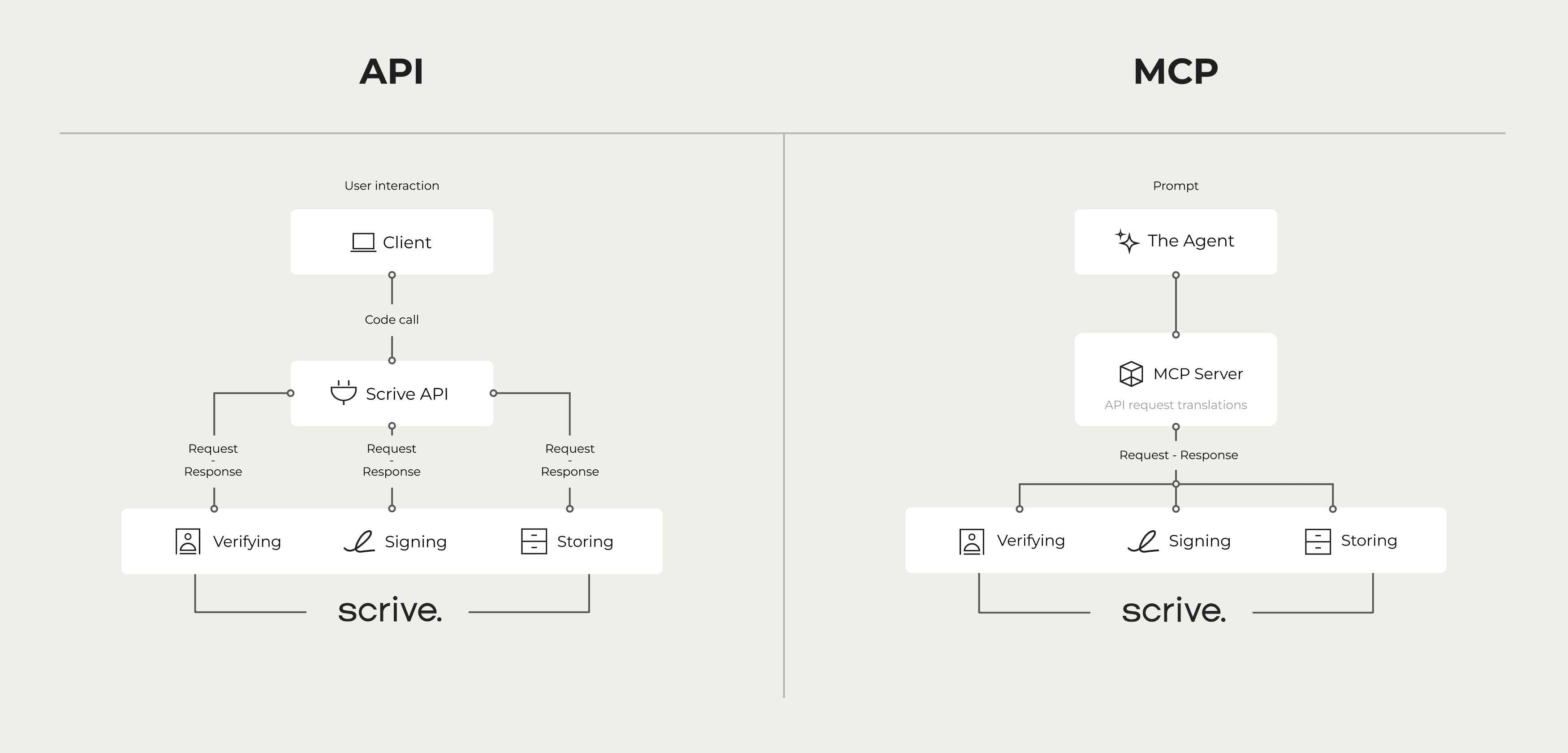
APIs connect software to software. MCP connects AI agents to software. Learn the difference and how Scrive's MCP server brings trusted eSigning to AI.
Read article
A side-by-side comparison of Scrive and DocuSign, using published G2 satisfaction scores. Sources and dates linked.
Read article