
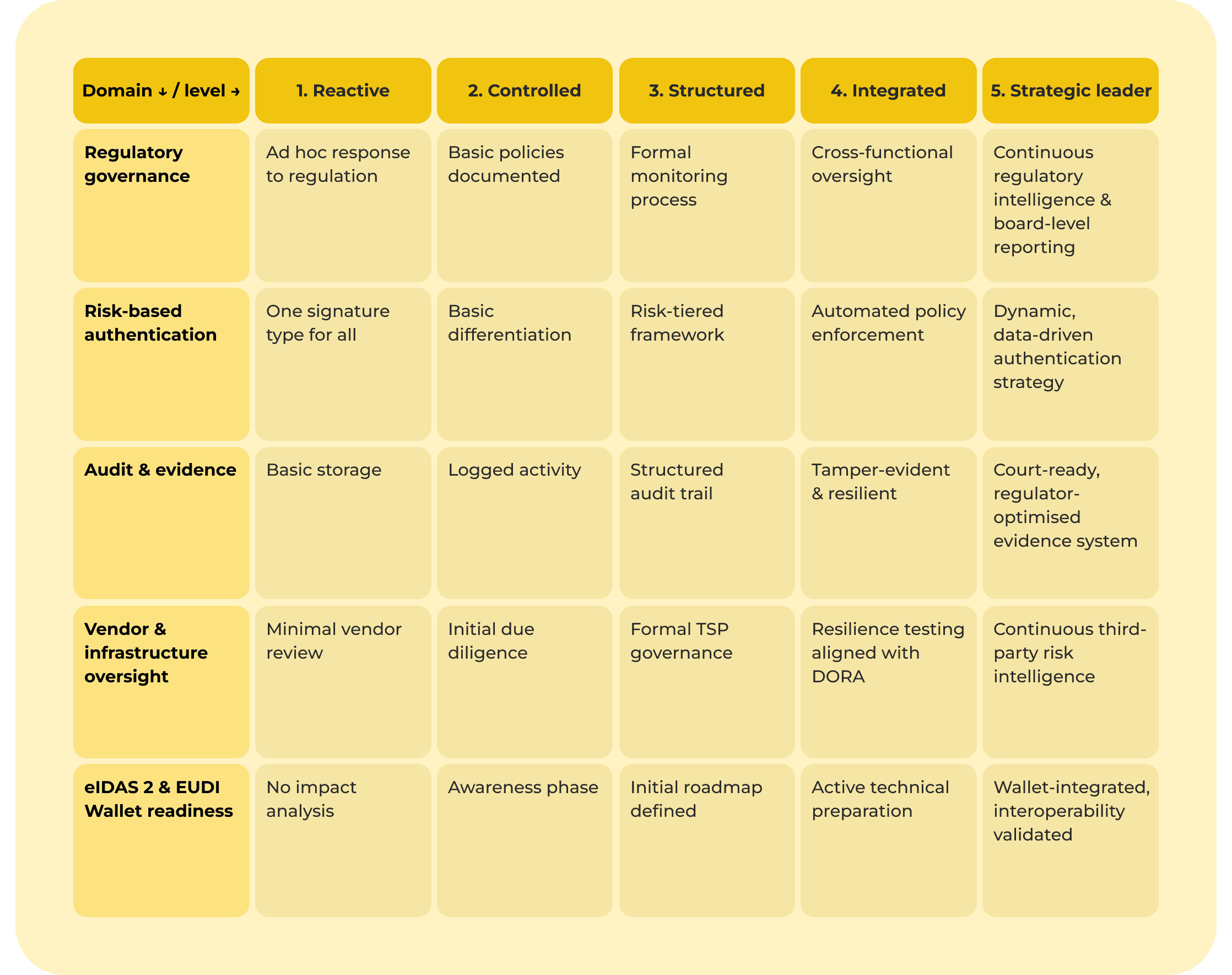
Assessing digital compliance maturity
For organisations operating in Europe, the ability to assess and advance digital compliance maturity is now the foundation.
Read articlePosted by Johanna Santos
Authentication has become a fundamental part of secure digital interactions,from accessing systems and onboarding customers to approving and signing documents. But what does authentication really mean in the European context, and why is it so important for modern businesses to understand it?
To support organisations navigating this landscape, we’ve just launched a comprehensive guide that explains how authentication works in Europe and why it matters for digital trust and legal certainty.
At a basic level, authentication is the process by which a digital service confirms that a person or organisation really is who they claim to be. While it involves technology, in the European context it also ties directly to legal and regulatory requirements, particularly where secure transactions and compliance are essential.
Good authentication does more than just secure access. It supports:
This means that for business and legal workflows, especially those involving electronic signing, choosing the right authentication methods is crucial for compliance and risk management.

In the European Union, authentication is closely linked to the eIDAS Regulation (electronic IDentification, Authentication and trust Services). eIDAS forms the foundation for electronic identification and trust services, ensuring electronic identities and transactions are recognised across member states.
Under eIDAS, levels of assurance, from low to high, help organisations match the strength of authentication to the risk and sensitivity of a transaction. Authentication best practice also intersects with standards from ETSI and requirements under GDPR, emphasising technical robustness, data protection, and transparency.
Authentication may use a combination of:
Europe’s harmonised approach means that digital identities and authentication methods recognised in one member state can often be trusted and accepted across borders. Read more about authentication vs identification.
As digital transformation continues across sectors, organisations should treat authentication not just as a technical matter but as part of regulatory compliance and trust infrastructure. Regularly reviewing authentication practices, aligning with applicable standards and regulations, and maintaining clear audit trails will help ensure secure, reliable digital processes.
To explore this topic in more depth, read the full guide to Understanding authentication in the European context in Scrive’s Knowledge Hub – your resource for detailed insights on digital identity, trust services and secure electronic interactions.
For organisations operating in Europe, the ability to assess and advance digital compliance maturity is now the foundation.
Read article
Explore why customer experience is key to successful digital transformation and how it impacts your business journey.
Read article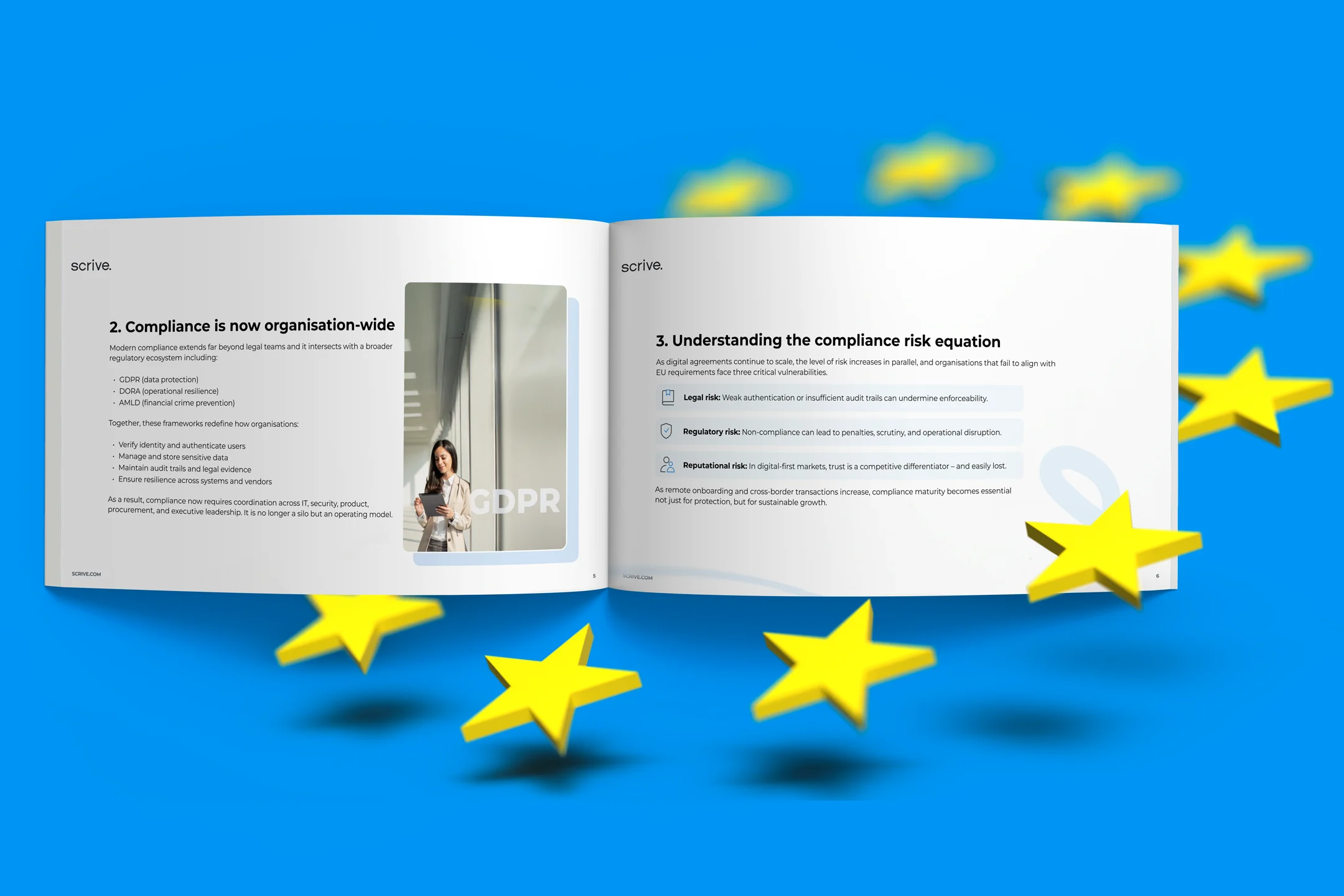
Compliance is becoming embedded directly into digital infrastructure, impacting everything from onboarding to cross-border transactions.
Read article