

Assured Technologies and Scrive partner to simplify car rental operations
Assured Technologies and Scrive have entered a strategic partnership to streamline digital workflows in car rental and vehicle logistics.
Read articlePosted by Jon-Thor Sigurleifsson

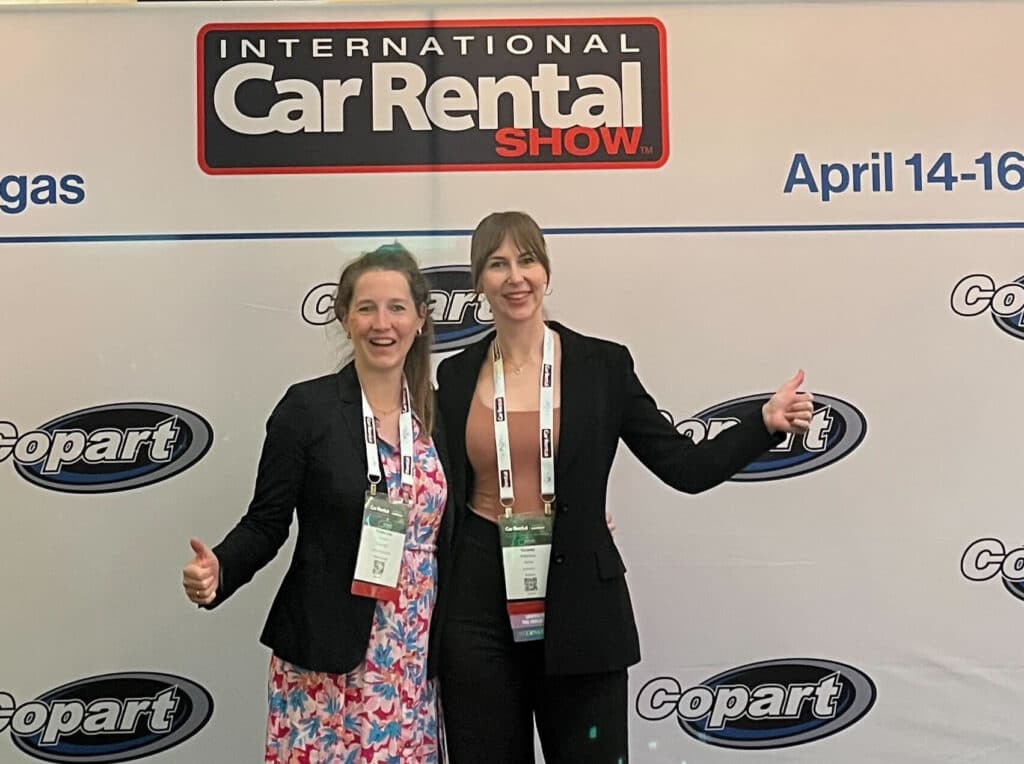
Our team recently spent a few days at the International Car Rental Show in Las Vegas, absorbing insights from panels, keynotes and hallway conversations. On top of having a great time meeting our partners, customers and new contacts, we saw certain topics come up more than any other.
While discussions ranged from fleet electrification to operational digitisation, geopolitics took centre stage. The big question? How the West plans to compete with China’s surging EV industry and what that means for rental companies everywhere.
Did you miss the event? Don’t worry, we’ve compiled our five key takeaways from ICRS 2025 for your reading pleasure.
China has surged ahead in EV innovation, from battery tech and vehicle software to AI-powered features. Post-pandemic, the scale and speed of that progress has become impossible to ignore.
But access to this tech is narrowing. In the US and increasingly in Europe, rising trade restrictions and tariffs are effectively walling off Chinese vehicles. On one level, this is a defensive move, an attempt to slow China’s momentum by limiting market access. But it also puts the West on the back foot, stalling the very innovation rental operators are counting on to modernise their fleets.
While US trade barriers are at least partly designed to protect jobs in domestic car manufacturing, there is a catch: If local automakers can’t match Chinese EVs on price or performance, rental companies could be left choosing between outdated internal combustion models or overpriced, underwhelming EV alternatives. Additionally 52% of new vehicles sold in the US are imported, so that will no doubt impact fleet sourcing for car rental companies in the market starting from 2026.
In Europe we’ve already seen those Chinese brands come onto the market and find their niche, often putting a lot of pressure on western car manufacturers to compete.
Either way, the cost is likely to land on fleet operators and ultimately, their customers. If we want to avoid this, we’ve got to work together as an industry to find a unified solution.
Once upon a time, major rental brands could aim for standardised fleets across continents. That’s no longer realistic. With diverging trade policies and regional politics shaping who gets access to what, we’re heading into a world of fragmented supply.
The same rental brand may operate vastly different vehicle lineups in the US, Europe, Asia or Africa. The era of globalisation and seamless cross-border supply? It’s being replaced by a patchwork of regional strategies.

One of the most interesting and important talking points that came up when speaking with some of the biggest players in the rental industry was that demand is getting close to recovering to pre-Covid levels. Comparing 2019 with 2024, there seem to be similar numbers when it comes to rental days but with fleet costs already rising, profits haven’t recovered to quite the same degree which means businesses need to think carefully about their next steps.
Countries that once leaned into partnerships with China, like Mexico and Russia, are now reassessing their approach. If BYD and other Chinese giants are shut out, local production lines may be forced to ramp up or pivot, raising costs across the board.
For rental companies, this could translate to higher upfront prices, fewer options, and slower EV adoption just as environmental targets and customer expectations demand the opposite.
Additionally with cars possibly staying longer in the rental fleet than before, the average fleet age increases which can negatively impact customer perception. However, if the used cars market improves there is a potential for gains in dealership sales and rental alike.
This is no longer just a supply chain issue, it is an existential shift. Rental operators can’t afford to wait on governments or OEMs to figure it out. They need to explore alternative paths now.
That could mean lobbying for incentives to import EVs, forming joint ventures with local automakers, or even backing startups that can help fill the gap with affordable, compliant vehicles. Creativity and agility will be key.
In conclusion:
What we saw in Las Vegas underscored that we’re entering a new era and it’s one where trade, technology, and transportation are tightly intertwined. Whilst a big focus was around the Americas and specifically US markets, some of the trends are certainly applicable globally. The car rental industry will need to be proactive, not reactive, in shaping its future. Because while the dust of trade wars may settle slowly, the impact on fleets, margins and mobility is already in motion.
Assured Technologies and Scrive have entered a strategic partnership to streamline digital workflows in car rental and vehicle logistics.
Read article
Dation & Scrive: Streamline contract management for driving schools with seamless digital signatures. Learn how to automate your workflows and save time.
Read article
The first pilot customer, T. van den Akker, is already live with the integration, enabling sales orders to be signed on a tablet in the showroom or remotely via the customer’s own device.
Read article