
Intent to sign: The signer clearly intended to be bound by the document.
Which documents can be signed electronically?
Electronic signature, Legal
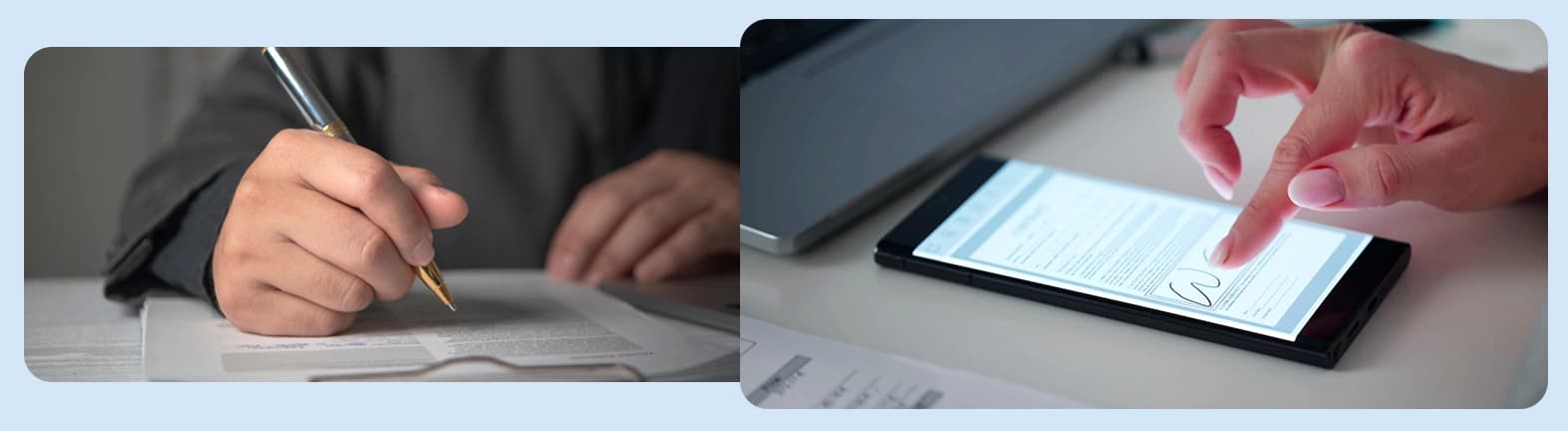
Electronic signatures are a standard part of modern agreement management. As organisations move away from paper-based processes, most contracts can be created, signed, and stored digitally. This reduces administrative effort, speeds up approvals, and improves visibility across teams and locations.
In most jurisdictions, including the UK, EU, and US, electronic signatures are accepted for a wide range of business and personal agreements. This includes sales contracts, HR documents, and lease agreements – as long as a document does not require a wet-ink signature by law.
Common documents you can e-sign
E-signatures are used across nearly all core business functions, particularly in contract-heavy processes where efficiency and clarity matter.
Sales agreements are among the most common examples. Customer contracts, order forms, subscription agreements, and renewals all benefit from faster turnaround times. This helps teams move deals forward without unnecessary delay.
Human resources documents are equally well suited to e-signing. Employment contracts, offer letters, non-disclosure agreements, and policy acknowledgements can all be e-signed, which is especially useful for distributed or international teams where onboarding speed is critical.
Service agreements, including consulting contracts, agency arrangements, and SaaS terms, are also frequently e-signed. This allows work to begin quickly without being held up by manual administration.
In real estate and rental processes, e-signing simplifies lease agreements, tenant applications, and property management contracts, often involving multiple parties who need to act quickly and in sequence.
Supplier and procurement workflows also benefit significantly. Vendor onboarding documents, purchasing agreements, and supplier terms can be processed more efficiently, improving turnaround times and reducing administrative friction.
Long-term commercial arrangements such as framework or master service agreements are another strong fit, as they typically involve structured approvals and ongoing collaboration.
Some organisations also extend e-signatures to formal internal documentation, such as annual report approvals or board resolutions, where auditability and version control are important.
Why these agreements work well for e-signing
These document types typically share a few defining traits: they are repetitive, involve multiple stakeholders, and depend on timely approvals to keep processes moving.
E-signatures are especially effective in workflows where speed and coordination are critical. When signatories are spread across locations or time zones, traditional signing processes quickly become a bottleneck that slows down decision-making.
By removing the need for printing, scanning, and manual handling, e-signatures allow agreements to be signed instantly from anywhere. At the same time, they improve visibility by tracking every step and securely storing documents in a central system.
Organisations can further strengthen control through identity verification, structured workflows, and complete audit trails – ensuring agreements move faster while remaining secure and compliant.

Scaling e-signing across the organisation
Many organisations begin with a single use case, often within sales or HR. Over time, however, the value of e-signatures often increases as adoption expands across departments.
When e-signing becomes widely used, contract workflows become more consistent and less dependent on manual coordination. Sales teams can close deals faster, HR can streamline onboarding, and procurement teams can improve supplier setup processes.
As a result, e-signatures evolve from a tactical tool into a foundational part of how the organisation operates, supporting faster decisions and smoother cross-functional collaboration.
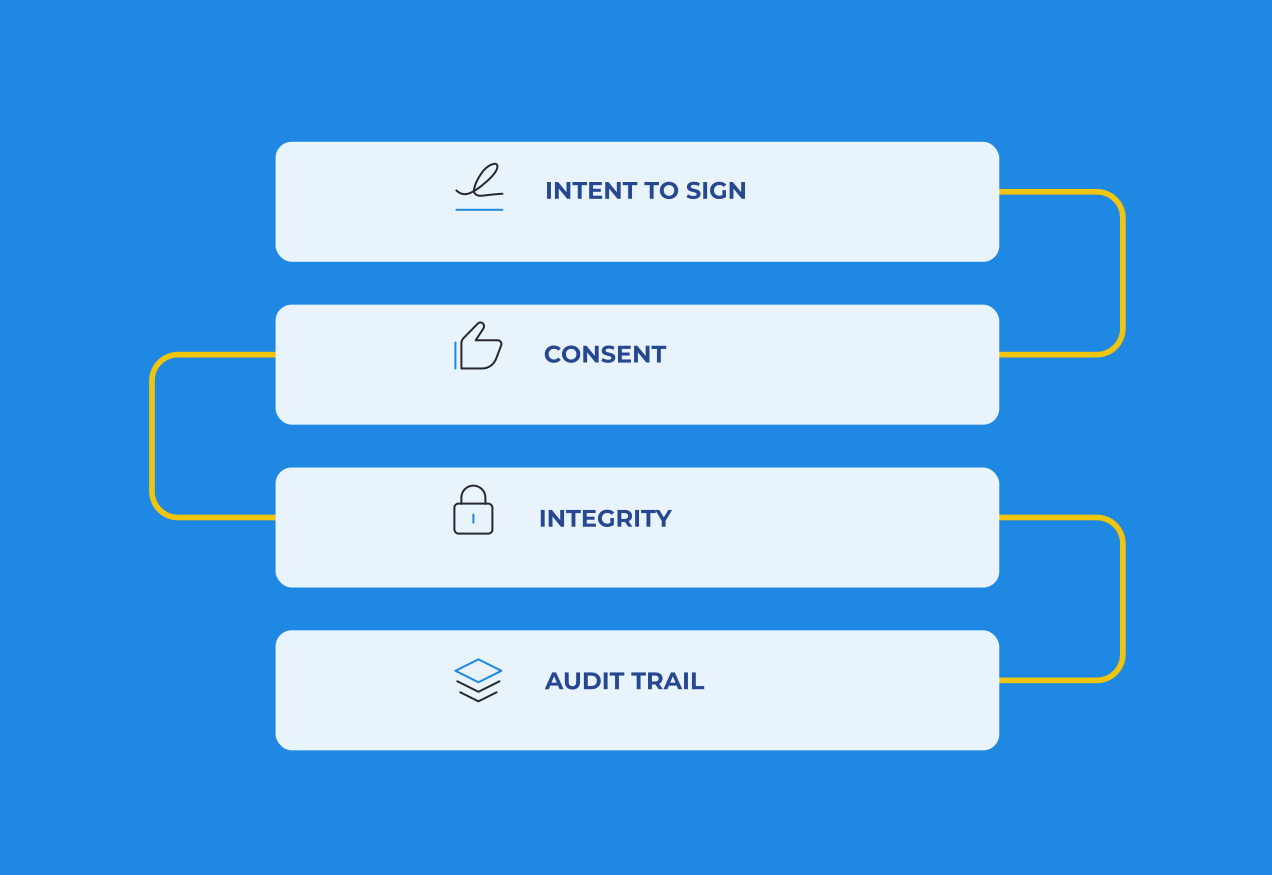
Consent: All parties agreed to conduct business electronically.
Integrity: The document has not been altered after the signature was applied.
Audit trail: A record of when, where, and by whom the document was signed.
Which documents cannot be e-signed?
While most business documents can be e-signed, a few exceptions may apply due to local legal requirements. Certain regulated documents, such as notarised agreements, wills, or specific government filings, may still require traditional signatures, although e-signatures are widely accepted for most commercial use cases.
Exceptions typically include:
- Wills and codicils: Many regions require physical witnesses to be present for the signing of a will.
- Certain property deeds: Some land registries still require paper filings for property transfers.
- Divorce and family law: Specific court orders or adoption papers may require traditional signatures.
- Notarised documents: In some cases, a notary must physically witness the signature.
End-to-end digital agreement management
Scrive enables organisations to manage the entire contract lifecycle in one connected flow, from creation and signing through to storage and compliance. This ensures agreements are handled consistently and securely at every stage.
By digitalising these workflows, organisations reduce manual effort while improving speed and transparency. Contracts move faster between stakeholders. Approvals are easier to track. Documents stay secure and easy to access in one system.
This also reflects a clear shift in how organisations operate. Most business documents can now be e-signed, particularly in sales, HR, services, procurement, and long-term commercial relationships. As digital transformation accelerates, e-signatures have become a foundational part of scalable, efficient agreement management.
Frequently asked questions
Are e-signatures legal for employment contracts?
Yes, employment contracts and offer letters are common use cases for e-signatures and are legally binding in most countries.
Can I sign a lease agreement electronically?
In most cases, yes. E-signatures are widely used for residential and commercial leases to speed up the move-in process.
Do I need a special device to e-sign?
No. You can sign documents on any device with internet access, including smartphones, tablets, and laptops – using your finger, a stylus, or a typed name.
Try Scrive eSign
FREE for 14 days
No obligation, no credit card required
Related articles
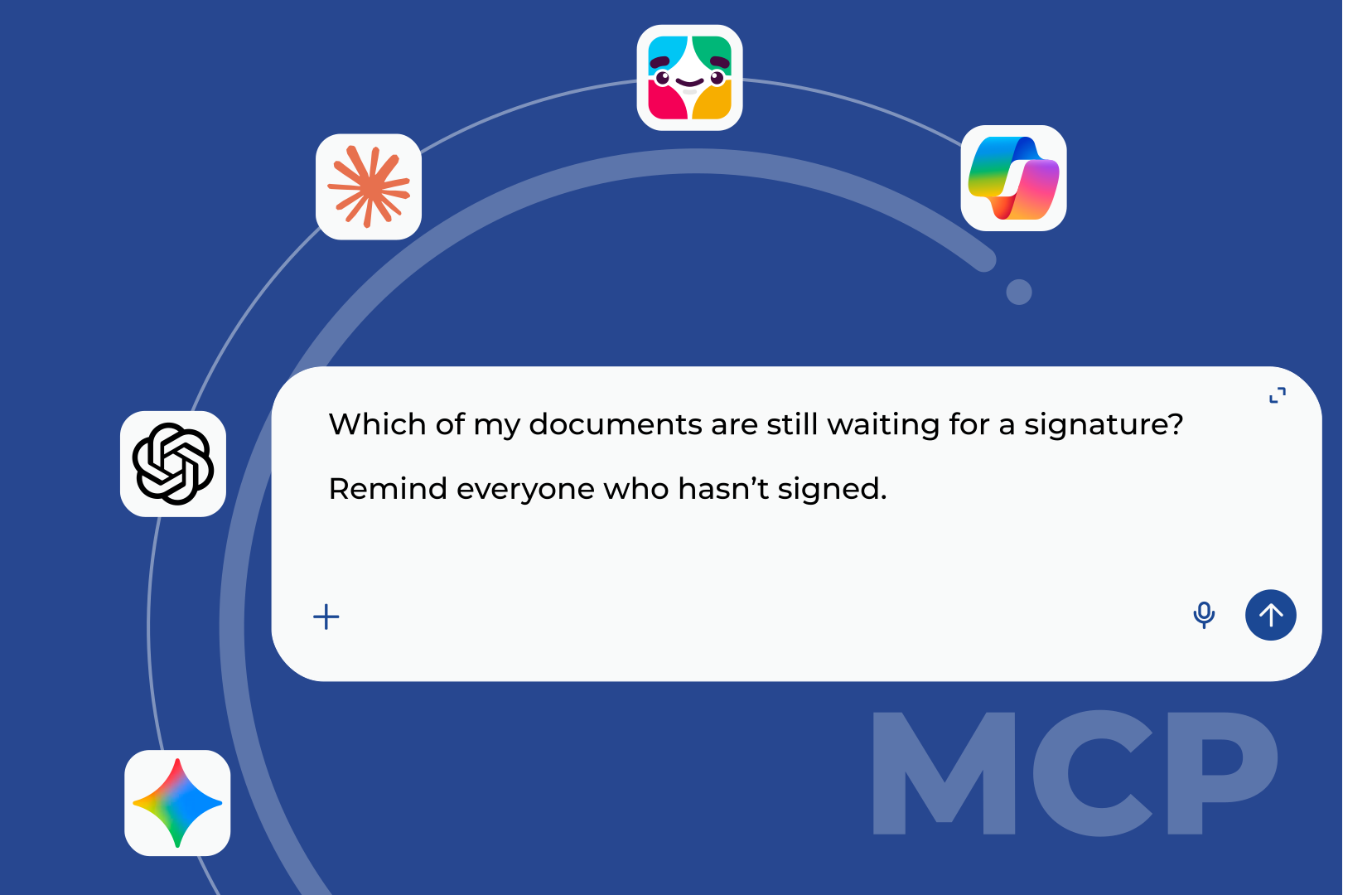
What can you do with Scrive MCP? 7 practical ways to work with agreements
See what you can achieve by connecting Scrive to your AI agent of choice (e.g. Claude, ChatGPT), with our open source MCP server.
Read article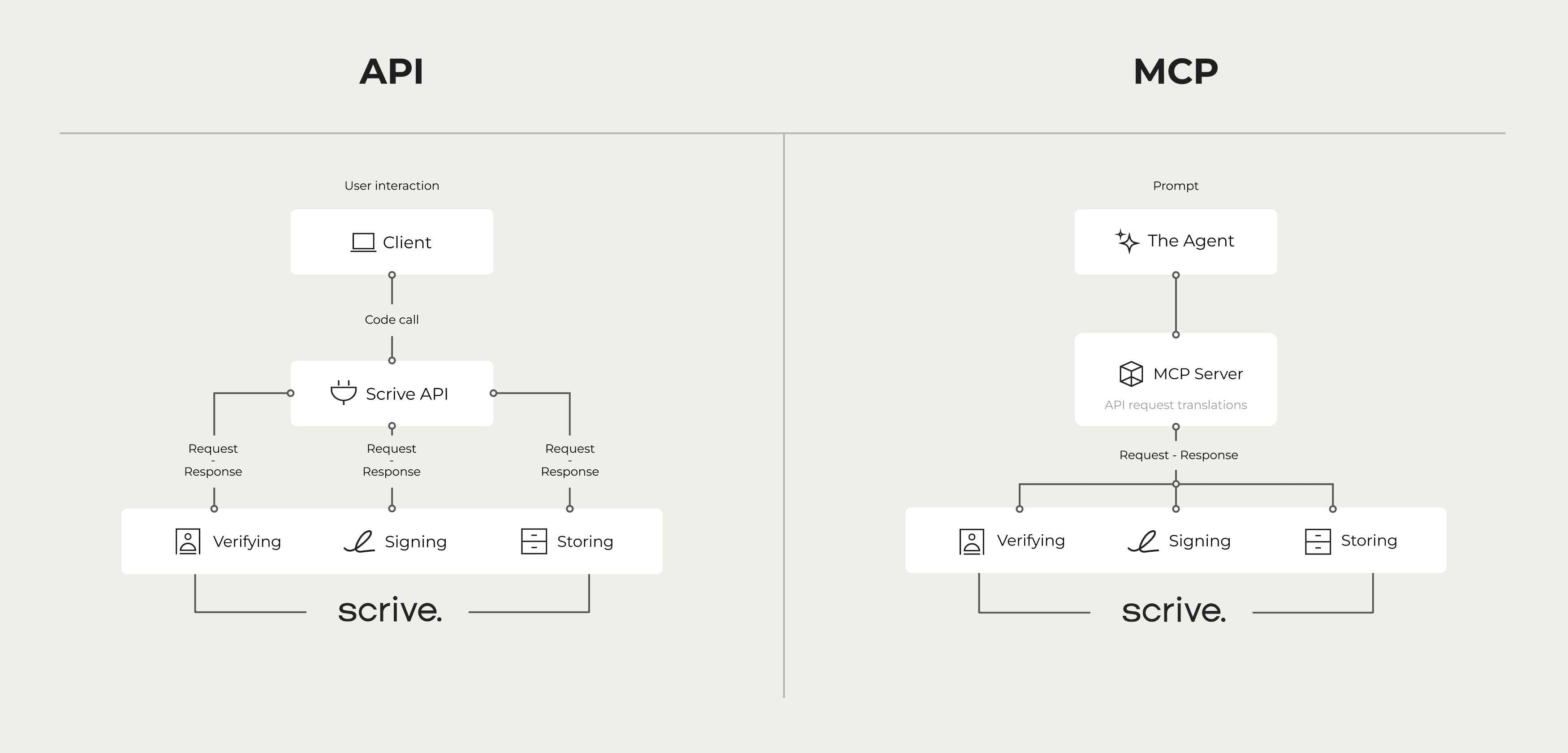
API vs MCP: What’s the difference and why it matters
APIs connect software to software. MCP connects AI agents to software. Learn the difference and how Scrive's MCP server brings trusted eSigning to AI.
Read article
Scrive compared to DocuSign
A side-by-side comparison of Scrive and DocuSign, using published G2 satisfaction scores. Sources and dates linked.
Read article