
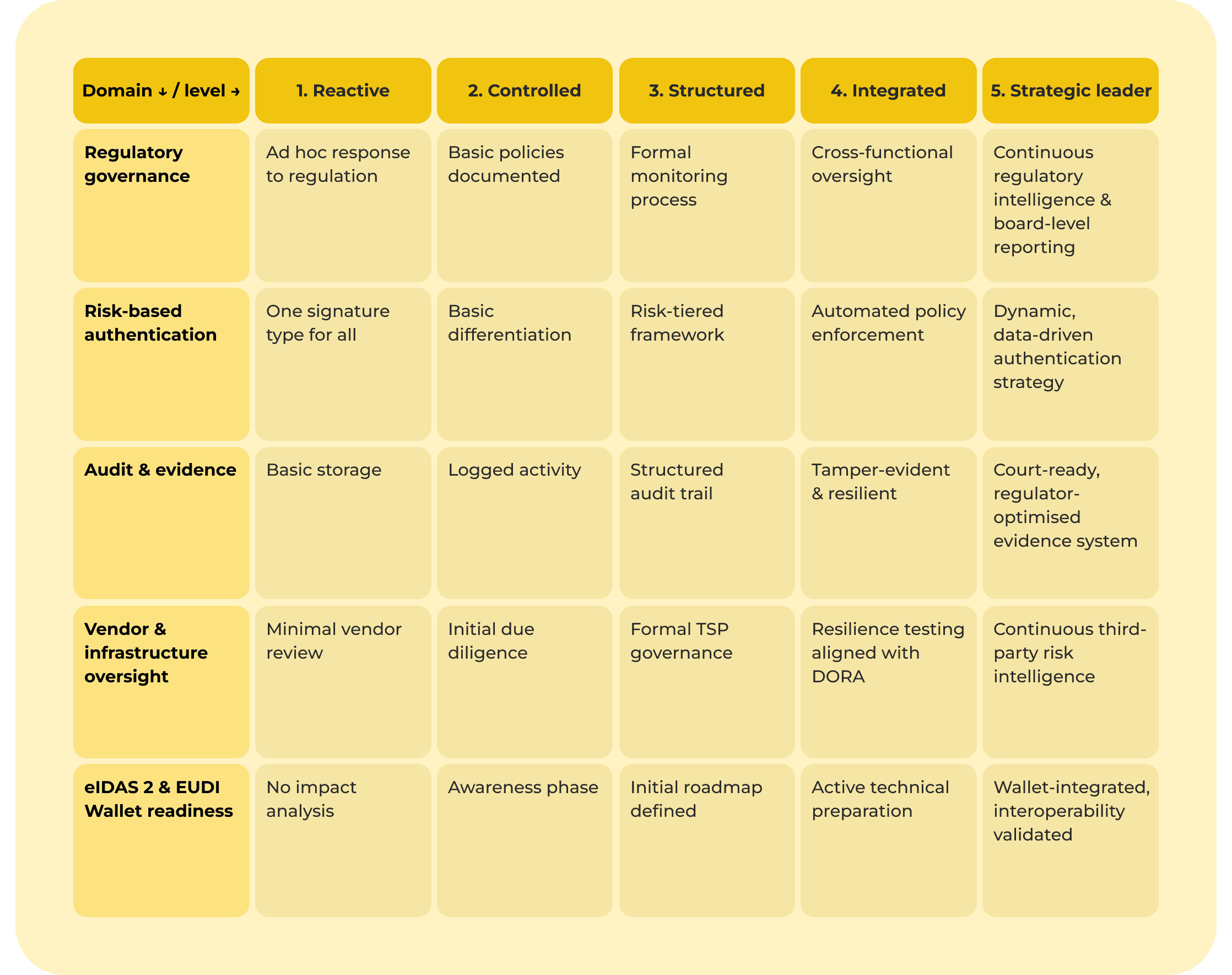
Assessing digital compliance maturity
For organisations operating in Europe, the ability to assess and advance digital compliance maturity is now the foundation.
Read articlePosted by Jon-Thor Sigurleifsson
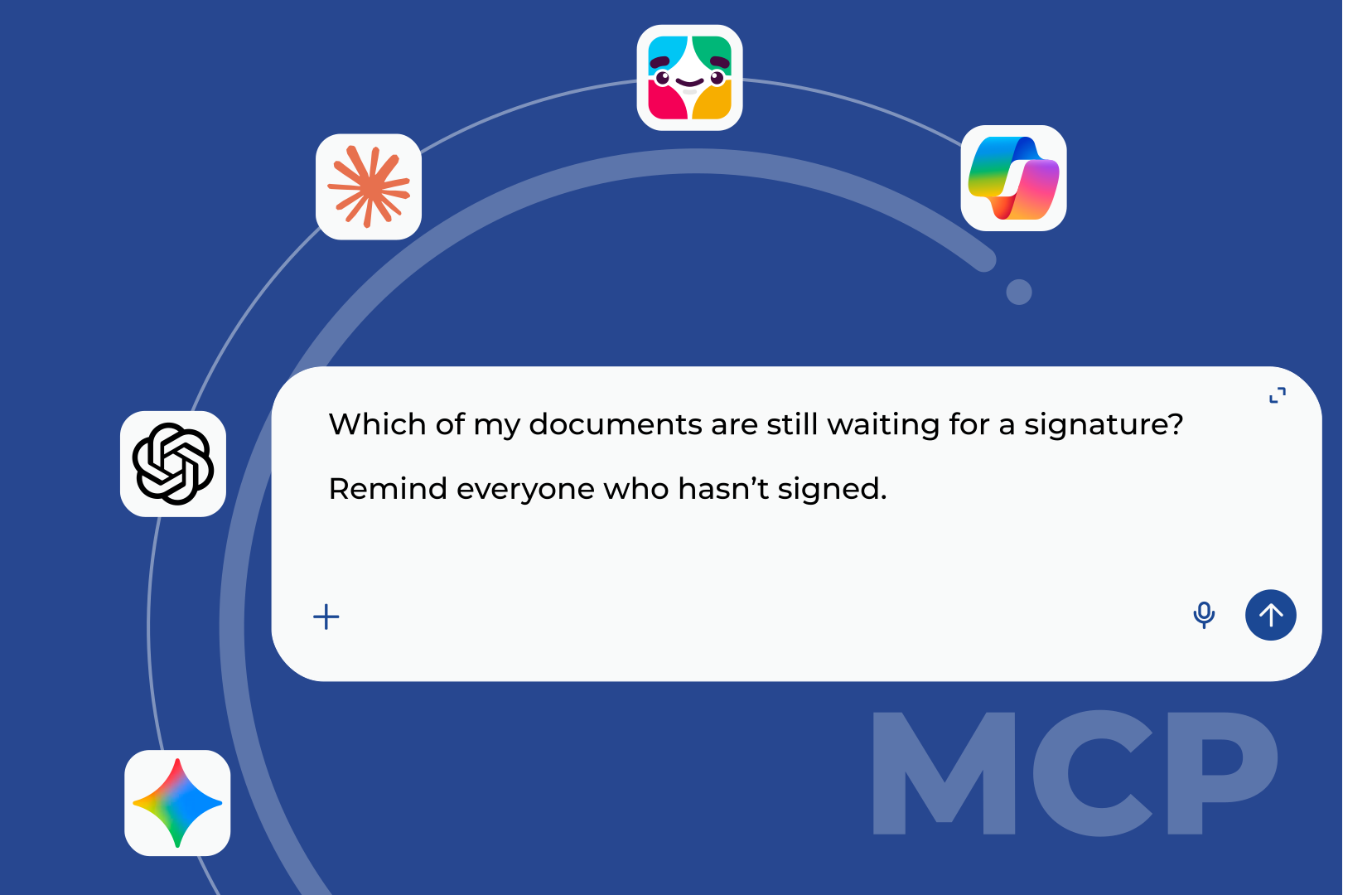
Scrive is making its e-signature, identity verification and document management capabilities available to AI assistants and agents through the Model Context Protocol.
AI has already changed how people interact with software. Instead of opening an application and working through a series of steps, users can increasingly ask an AI assistant to help them complete a task. But generating an answer is only part of the workflow. To actually get something done, AI needs to be able to interact with the systems and services businesses already rely on.
That’s why Scrive has launched the Scrive MCP Server, an open-source connection that allows AI environments such as ChatGPT, Copilot and Claude to interact with Scrive’s e-signature, identity verification and document capabilities.
With Scrive MCP, users can bring trusted agreement workflows into the AI environment where they are already working. An AI assistant can help draft an agreement, send it for signature, trigger identity verification, track signing progress and analyse archived agreements, all without requiring the user to manually move between different applications.
The Model Context Protocol, or MCP, is an open standard that provides a way for AI applications to connect with external tools and services.
For users, the idea is relatively simple. Rather than an AI assistant only being able to understand and generate information, MCP can give it access to capabilities outside the AI itself.
Instead of opening an e-signature platform to send an agreement, for example, a user could ask their AI assistant to prepare and send one as part of a larger workflow.
The AI becomes the interface, while the underlying services continue to perform the actions they are trusted to perform.
For Scrive, the opportunity is not simply about making e-signatures available through another interface.
As AI becomes more capable of taking action, the services behind those actions need to retain the security, identity and accountability that businesses depend on.
An AI agent may be able to initiate an agreement workflow, but the organisation still needs to know what happened, who was involved and what actions were authorised.
This is particularly important when workflows involve legally significant documents or identity verification.
“AI is already changing how work gets done. Now it’s changing how that work gets signed,” says Mads Rebsdorf, CEO at Scrive.
“That means the infrastructure around those workflows needs to evolve as well. We see MCP as an important part of making trusted services available in AI environments where more and more work will happen.“
Giving AI the ability to take action introduces new questions for businesses.
What should an agent be allowed to do? Where should human approval remain? How should actions be authenticated and recorded? How can organisations maintain accountability when software is acting on someone’s behalf?
These are questions that Scrive believes need to be considered alongside the technology itself.
The move towards agentic AI does not make trust less important. It makes trusted infrastructure more relevant.
The Scrive MCP Server is one step towards that future: connecting AI with the e-signature, identity and document capabilities businesses already rely on, while keeping security, identity and accountability at the centre.
Find out how to integrate Scrive into AI developed applications
To see how Scrive is working with partners on trusted AI transformation projects, click here.
For organisations operating in Europe, the ability to assess and advance digital compliance maturity is now the foundation.
Read article
Explore why customer experience is key to successful digital transformation and how it impacts your business journey.
Read article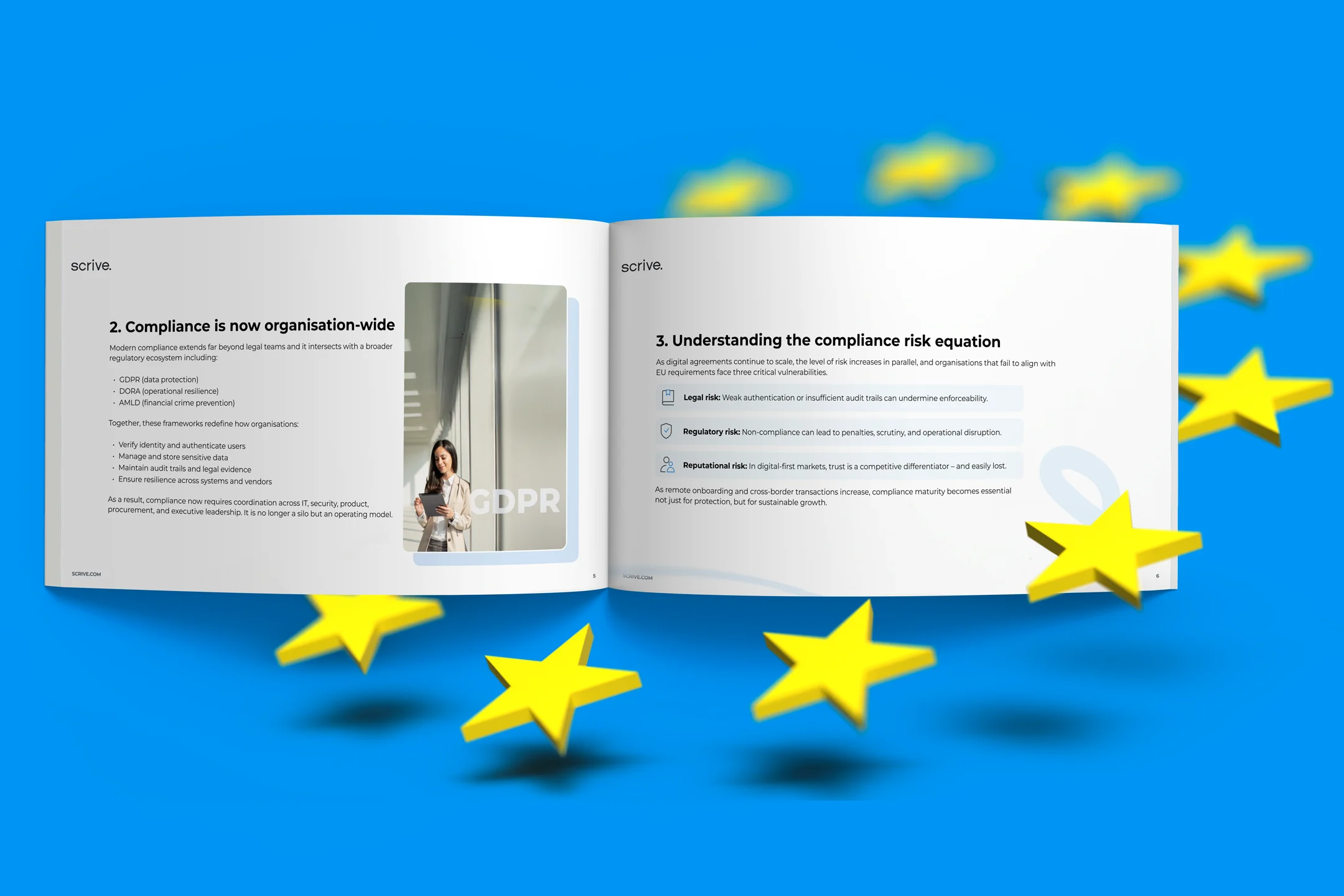
Compliance is becoming embedded directly into digital infrastructure, impacting everything from onboarding to cross-border transactions.
Read article