In an era of rapid regulatory evolution, compliance has shifted from a legal checkbox to a core strategic capability. For organisations operating in Europe, the ability to assess and advance digital compliance maturity is now the foundation for trust, resilience, and cross-border growth.
What is digital compliance maturity?
Digital compliance maturity is a measure of how effectively an organisation integrates regulatory requirements, such as eIDAS 2, GDPR, and DORA, into its digital agreement workflows. A mature organisation moves beyond reactive legal fixes toward a compliance-by-design approach, where risk-based authentication and automated audit trails are built into the fabric of the business.
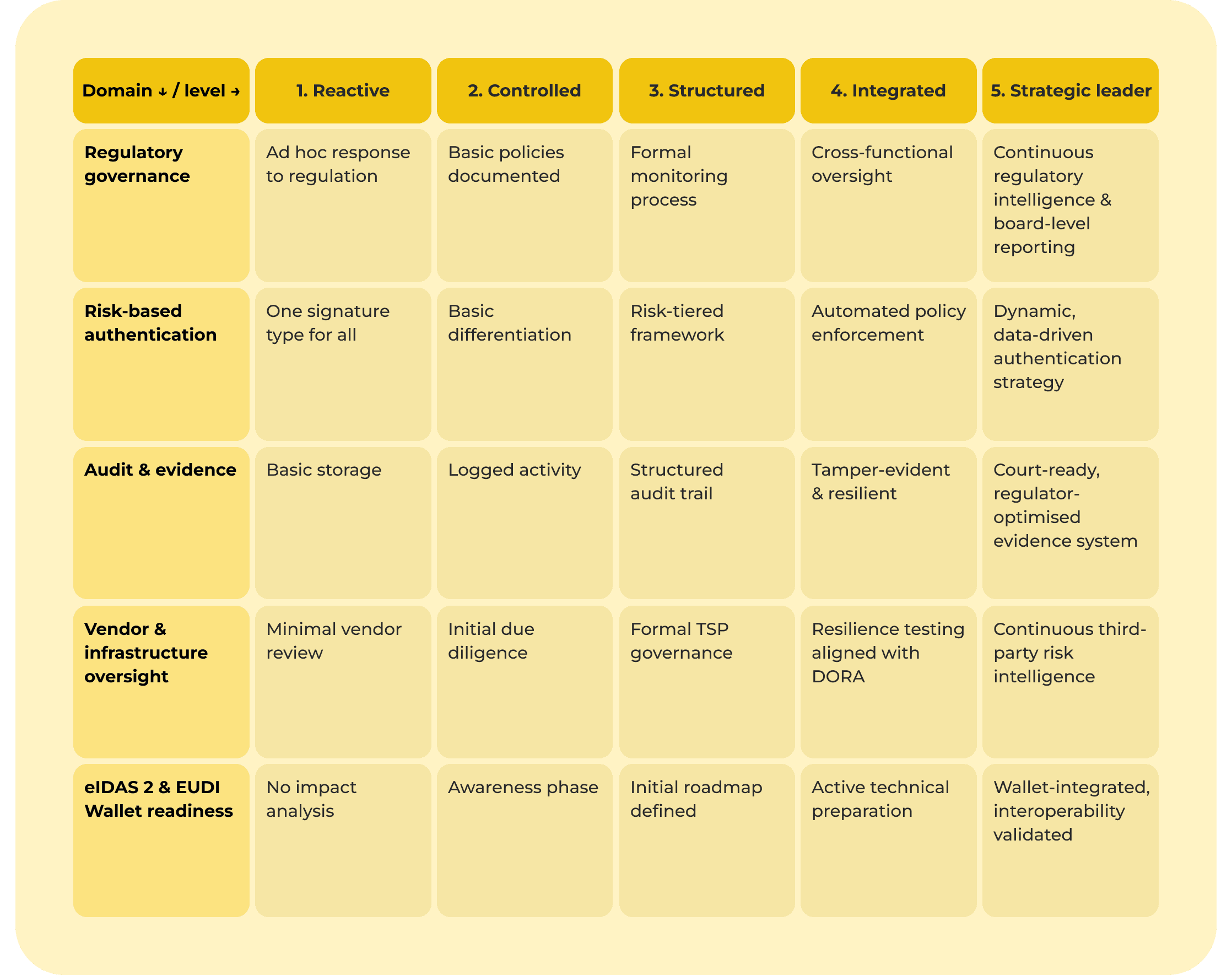
The digital compliance maturity matrix
Organisations rarely mature evenly across all domains. By using a structured maturity model, you can identify whether your processes are Reactive (ad hoc responses), Structured (formal monitoring), or reaching the level of a Strategic leader (continuous intelligence and board-level reporting).
3 steps to advance your compliance strategy
Identifying your current level is the first step toward building a defensible compliance framework.
- Score each domain (1–5): Assess your current maturity level across the five domains listed above.
- Identify the gaps: Look for uneven maturity. For example, you may have strong authentication but weak long-term evidence preservation.
- Prioritise high-risk areas: Focus on common gaps that create the greatest exposure, such as cross-border enforceability and eIDAS 2 readiness.