
1. Regulatory awareness
- Clear understanding of eIDAS, eIDAS 2, GDPR, DORA, AMLD implications
- Ongoing monitoring of EU-level regulatory updates
Posted by Johanna Santos
“Compliance has moved from the legal department to the boardroom, becoming the foundation for digital trust, enterprise risk management, and scalable digital business.”

Europe’s regulatory environment is evolving rapidly. From strengthened digital identity frameworks to stricter operational resilience requirements, compliance is no longer a legal afterthought, but a vital strategic capability.
For organisations operating across EU markets, digital agreements, authentication, and identity verification now sit at the intersection of legal validity, operational risk, and customer trust.
The foundation of digital trust in Europe is the eIDAS regulation, which has standardised electronic identification and trust services across Member States.
Its update, eIDAS 2.0, marks a structural shift. At its core is the European Digital Identity Wallet (EUDI Wallet), now enabling citizens and businesses to store and share verified credentials across borders.
For organisations, this means:
Compliance is becoming core infrastructure and embedded into digital workflows rather than layered on top.
Compliance no longer operates in isolation within the legal department. It now spans the entire organisation and intersects with a broader European regulatory ecosystem, including the General Data Protection Regulation (GDPR), the Digital Operational Resilience Act (DORA), and the Anti-Money Laundering Directive (AMLD).
These frameworks reshape how organisations handle identity verification and authentication, manage data protection and retention, preserve evidence and maintain auditability, and oversee operational resilience and third-party risk.
Meeting these requirements demands coordination across IT, security, procurement, product, and executive leadership, embedding compliance as a core part of operational and strategic decision-making.
Failure to align digital agreement processes with regulatory requirements exposes organisations to three main risks:
1. Legal enforceability risk: Improper authentication or weak audit trails may undermine contractual validity.
2. Regulatory risk: Non-compliance can trigger supervisory scrutiny and financial penalties.
3. Reputational risk: Trust is a competitive differentiator and weak compliance damages credibility in digital-first markets.
As remote onboarding and cross-border contracting accelerate, risk scales with volume. Compliance maturity therefore becomes essential to sustain and achieve desired growth.
“Digital agreements must be backed by more than convenience. They require a defensible compliance framework that enables trust, resilience, and cross-border growth.”
Forward-looking organisations embed compliance directly into digital agreement workflows, using risk-based authentication, automated audit logging, structured governance, and ongoing regulatory assessment. Far from slowing innovation, this approach enables secure, scalable expansion across EU markets. In today’s digitally connected Europe, compliance is no longer just about avoiding penalties, it is the foundation for trusted business growth.
Organisations can start by reviewing their digital agreement processes to identify where compliance can be embedded at every step. Platforms like Scrive provide the tools and guidance to implement these controls efficiently and at scale. With Scrive EC (Extended Compliance), organisations gain enhanced identity verification, advanced audit trails, and built-in regulatory safeguards, helping them meet stringent legal and industry requirements while maintaining a seamless signing experience.
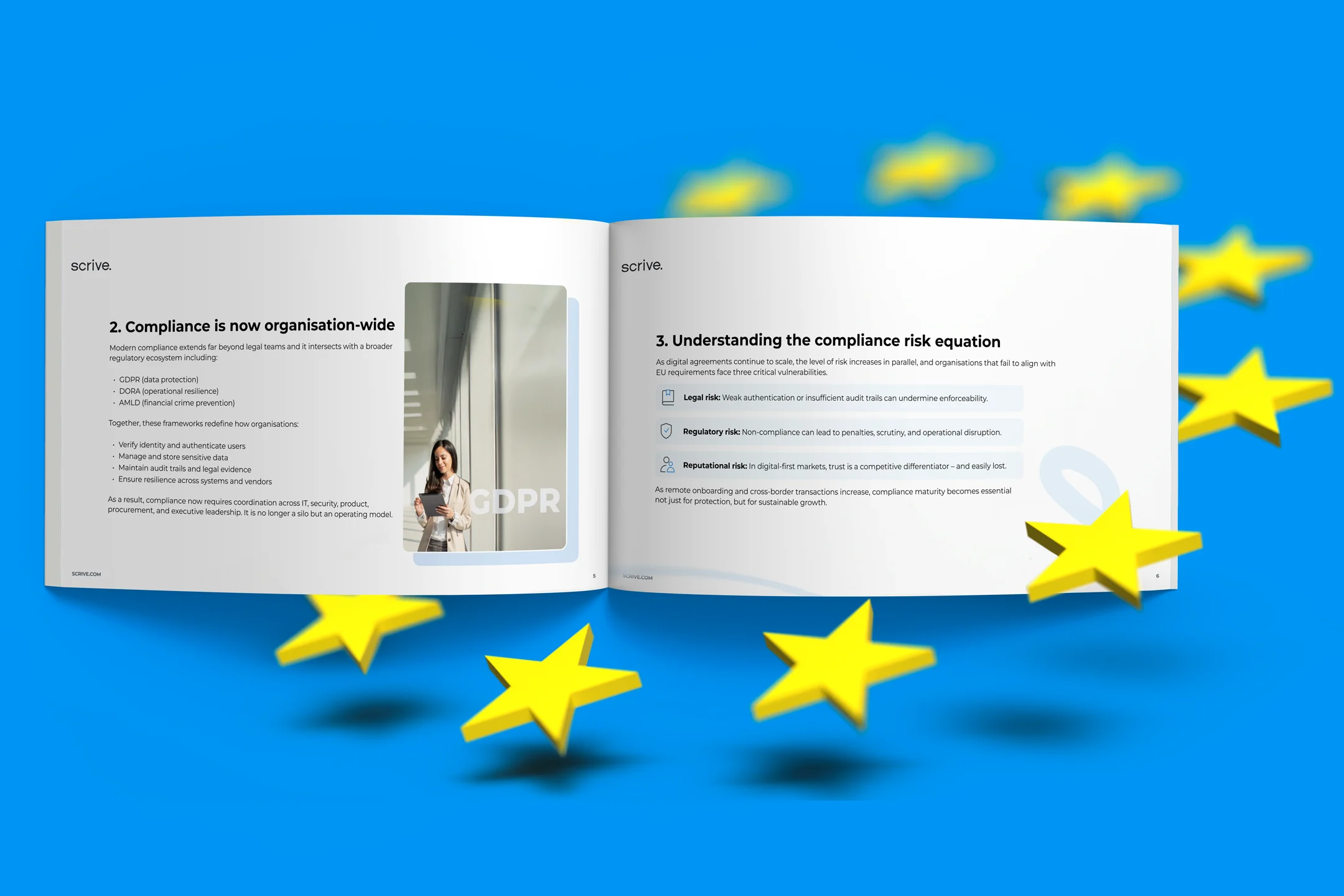
The European digital compliance playbook: From obligation to opportunity is a practical guide for organisations looking to turn digital compliance into a strategic advantage.
Covering key frameworks such as eIDAS 2.0 and GDPR it outlines how to strengthen digital trust, reduce risk, and build scalable, compliant processes across borders, helping you move from reactive compliance to a compliance-by-design approach.

Skills shortages, rising costs and growing obligations are putting increasing pressure on housing companies and cooperatives. One often-overlooked opportunity to create capacity lies in their own contract processes.
Read article
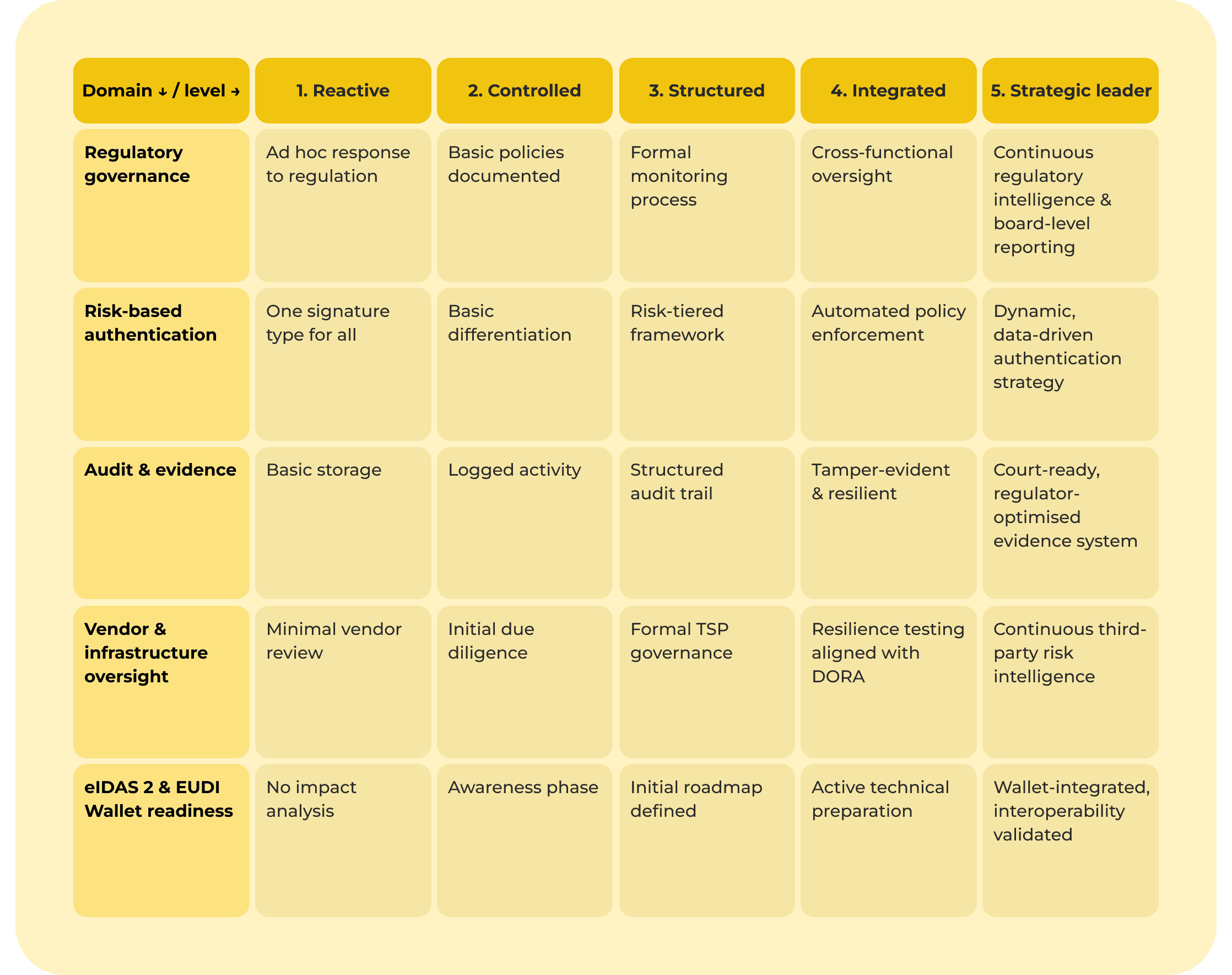
For organisations operating in Europe, the ability to assess and advance digital compliance maturity is now the foundation.
Read article