How to fill in a mutual NDA – Step-by-step guide
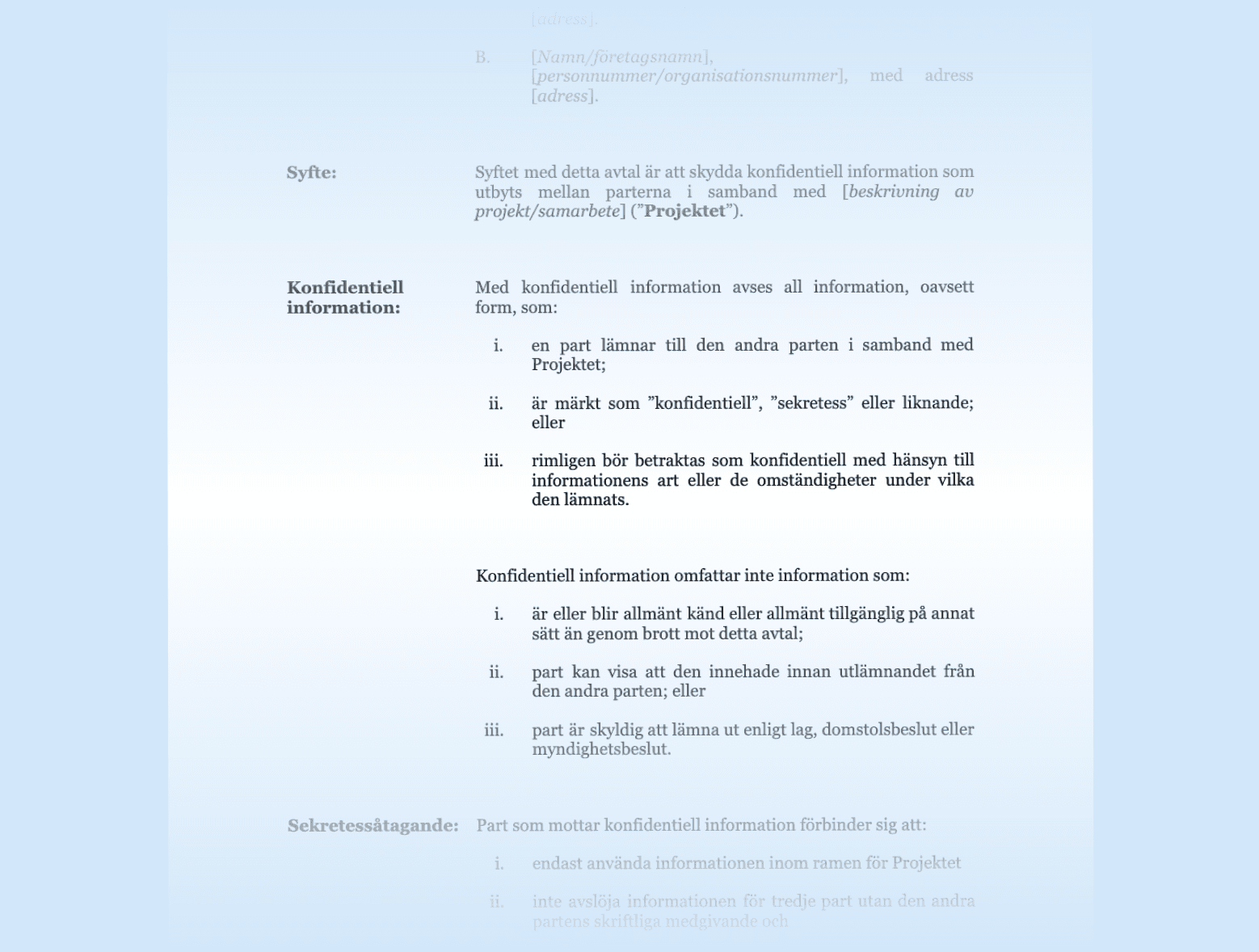
Purpose
Briefly and clearly describe the collaboration or project that requires the parties to exchange confidential information.
What counts as confidential information
The agreement defines what is considered confidential information. It does not cover information that is publicly available without a breach, already known by a party before disclosure, or required to be disclosed by law.
Penalty clause
Because it can be difficult and resource-intensive to prove the extent of damage caused by an unauthorised disclosure, penalty (liquidated damages) clauses are sometimes included in NDAs as an enforcement mechanism. If you do not want to include a penalty clause, enter 0 (zero) in the amount field.
Duration
- Notice period: State the number of days’ notice required to terminate the agreement (e.g. 30, 60, or 90 days).
- Post-termination confidentiality: State the number of years confidentiality obligations should continue after the agreement ends (e.g. 2, 5, or 10 years).
Signatures
If either party is a legal entity, ensure the signatory has the authority to bind that entity.
Summary
A non-disclosure agreement (NDA) protects your business from sensitive information being disclosed or misused. With Scrive, you can manage the entire process digitally – from drafting to legally traceable, secure signing.
Advice: Always sign an NDA before sharing business ideas, prototypes, or customer data.
Please note that these documents are templates only and cannot replace tailored legal advice for your specific situation. When using these documents, ensure that the instructions are read carefully and that any uncertainties or questions are discussed with a qualified lawyer in the relevant field. Neither Bird & Bird nor Scrive AB can be held liable for the content of the documents or any consequences arising from their use.
Please also read our guide on how to sign PDFs with Scrive