
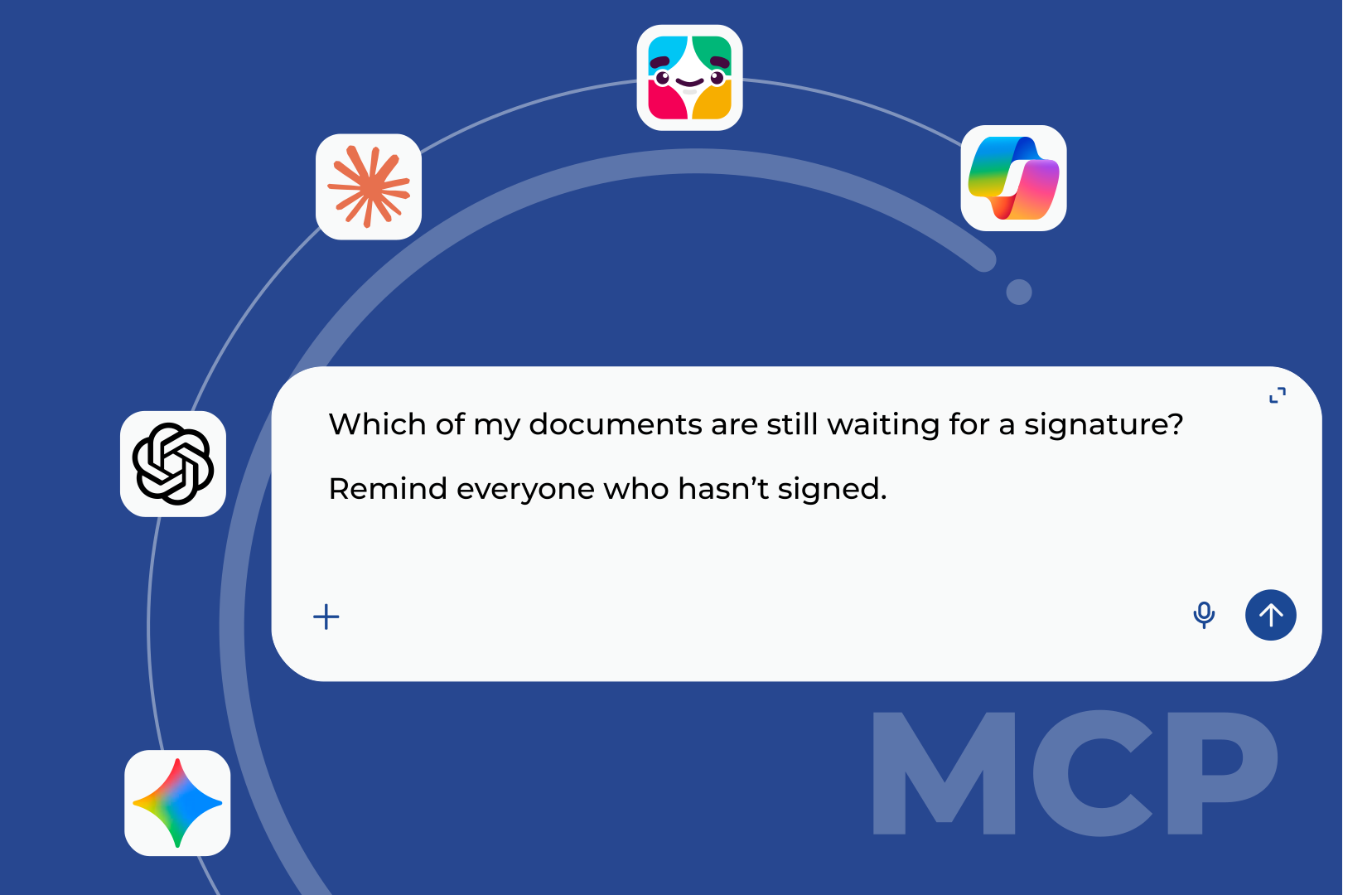
What can you do with Scrive MCP? 7 practical ways to work with agreements
See what you can achieve by connecting Scrive to your AI agent of choice (e.g. Claude, ChatGPT), with our open source MCP server.
Read articleAn introduction to APIs for curious beginners, answering the questions you've been afraid to ask as well as a look at where APIs are going.


Imagine you’re going to connect an electrical appliance in your home. You need to make sure the voltage is correct, that the plug fits the outlet and, of course, that it’s connected in the room where you plan to use it.
Luckily there are standards that ensure that your home should have the same types of outlets in all rooms and that appliances bought in your country should be optimised for those standards.
But what if that wasn’t the case?

This is an ongoing issue within software. You want everything to communicate and collaborate in effective ways but not everything has been set up to do so by default. So if we go back to the electric analogy, it’s as if some outlets in your home were based on European standards, some on US standards and yet others on UK standards, with your devices equally disparate.
If that was the case, you’d need a solution to make sure all these different devices and outlets worked together in a seamless way and that’s what APIs do for software.
An API is, simply put, a set of rules that allows one software application to interact with another, facilitating seamless communication and data exchange. APIs are the invisible threads that connect the digital world, enabling diverse systems to work together harmoniously.
APIs streamline operations by automating tasks and integrating systems, making them crucial for handling high volumes of transactions. Moreover, APIs empower businesses by enabling them to leverage external services, enhancing their capabilities without reinventing the wheel.
How APIs facilitate software integration
APIs are the bridges that connect disparate software systems, enabling them to work together seamlessly. They allow businesses to integrate various SaaS platforms, automating workflows and reducing manual effort. For instance, integrating a CRM system with an e-signature service via an API can streamline customer onboarding, ensuring data consistency and enhancing efficiency.
Practical examples from Scrive
Scrive offers a suite of APIs designed to simplify document management and identity verification. Our document API is particularly noteworthy, enabling businesses to initiate signature processes effortlessly. This API has been instrumental for companies like Avis, who have significantly reduced the time spent on document handling, thanks to the digitisation and scaling capabilities provided by Scrive.
Enhancing efficiency with Scrive’s document API
Scrive’s document API has transformed the way businesses handle agreements. By automating the signature process, companies can focus on their strategic goals rather than administrative tasks. This API has proven its worth in various sectors, including automotive and finance, by streamlining operations and improving accuracy.
As businesses increasingly rely on digital solutions, understanding and leveraging APIs will be crucial to staying competitive and agile.

A common misconception is that once two systems are integrated via an API, no further adjustments are necessary. However, the utility of an API depends on how effectively it is implemented and maintained. Regular updates and optimisations are essential to ensure continued efficiency and compatibility.
So what is the next big thing in APIs? As AI technologies continue to evolve, APIs will play a pivotal role in facilitating interactions between AI models and software applications. The emerging MCP standard is set to revolutionise how APIs are utilised, making them the primary interface for AI-driven services.
See what you can achieve by connecting Scrive to your AI agent of choice (e.g. Claude, ChatGPT), with our open source MCP server.
Read article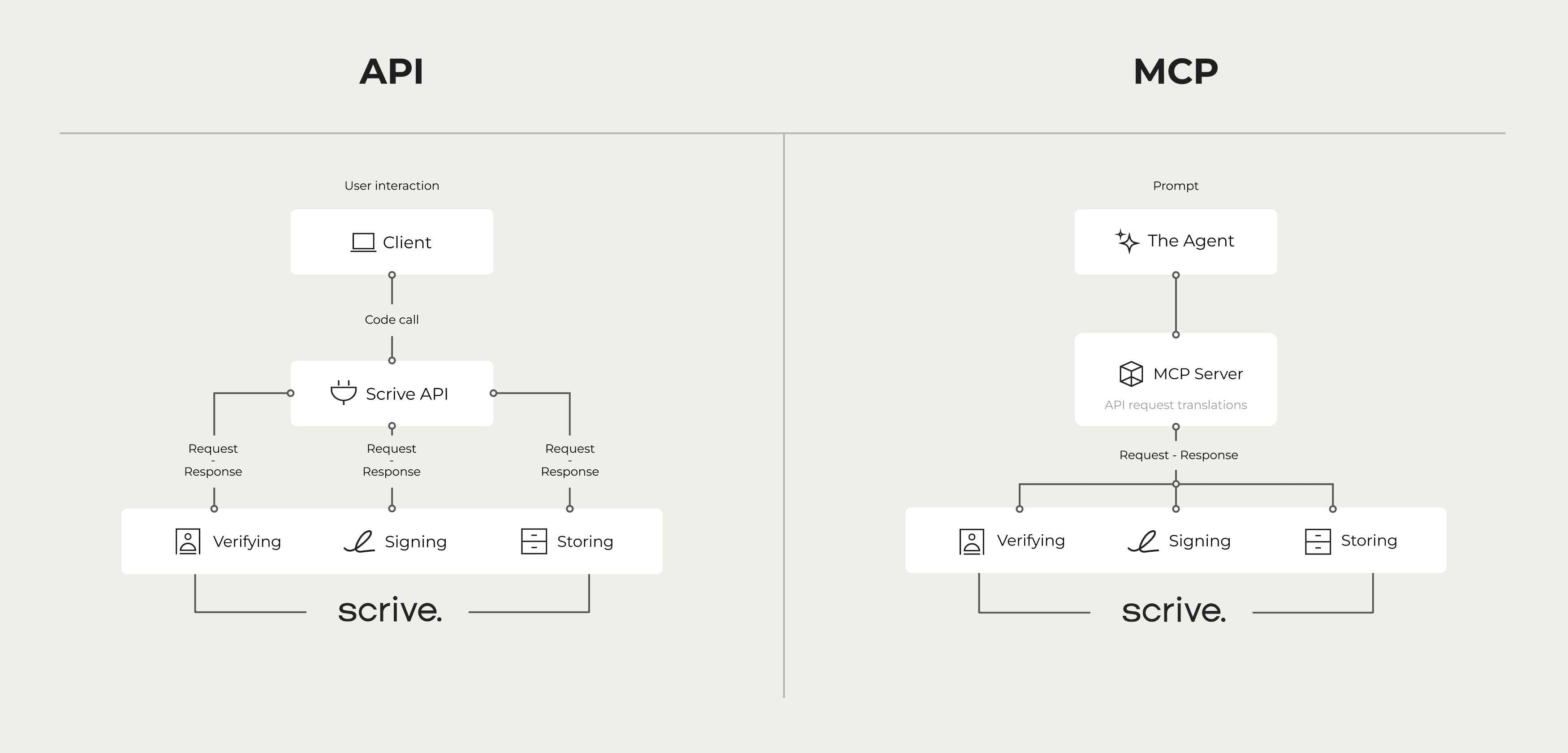
APIs connect software to software. MCP connects AI agents to software. Learn the difference and how Scrive's MCP server brings trusted eSigning to AI.
Read article
A side-by-side comparison of Scrive and DocuSign, using published G2 satisfaction scores. Sources and dates linked.
Read article