
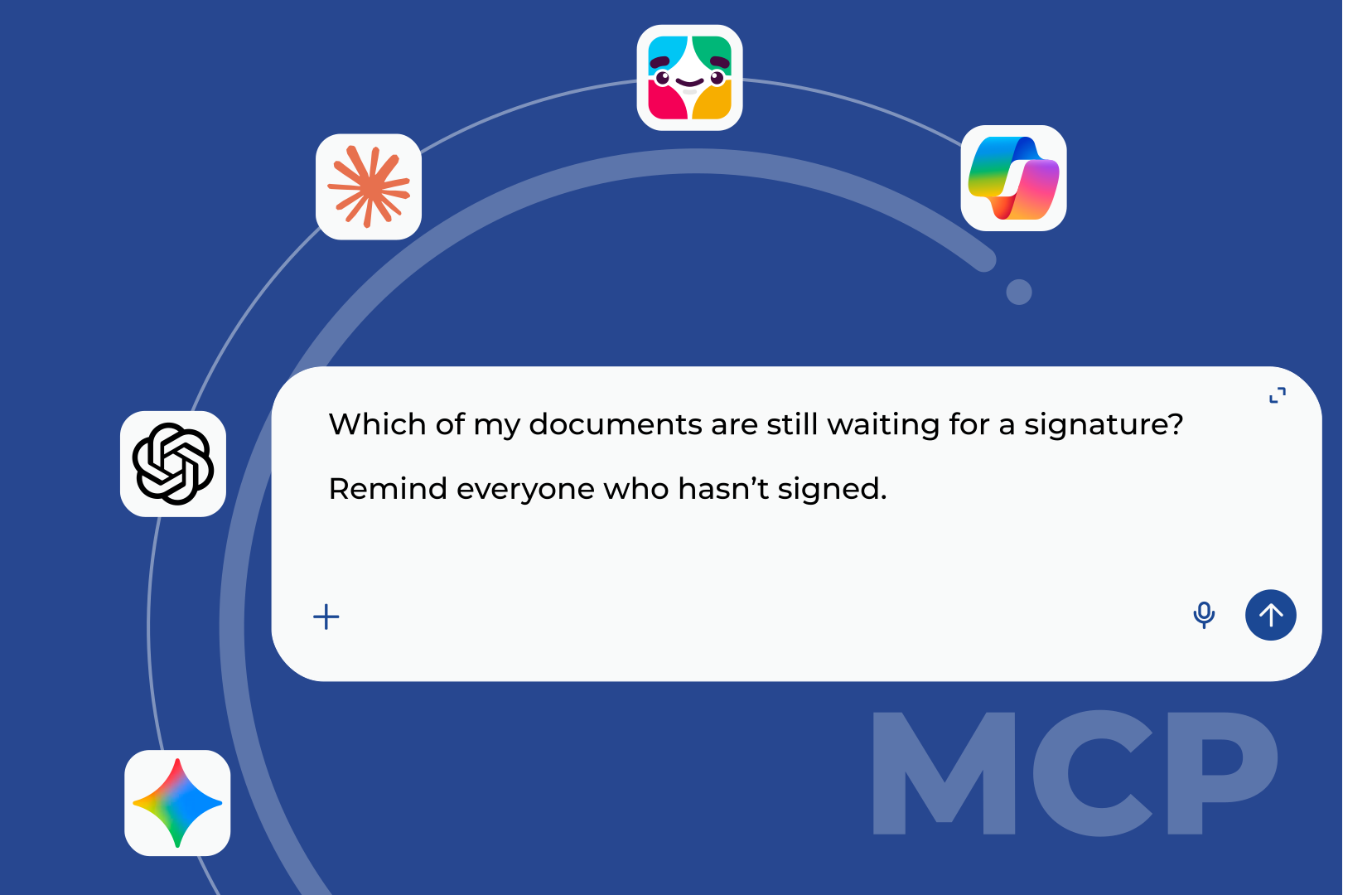
What can you do with Scrive MCP? 7 practical ways to work with agreements
See what you can achieve by connecting Scrive to your AI agent of choice (e.g. Claude, ChatGPT), with our open source MCP server.
Read articleArtificial intelligence is transforming how contracts are created, reviewed, and managed. From automated data extraction to AI-assisted analysis, workflows are becoming faster and more efficient. As AI takes on a larger role in digital workflows, certainty becomes critical. Businesses must be confident that the person signing a document is exactly who they claim to be – because without trust, speed stops being innovation and starts becoming risk.
Digital transformation only works when trust is built into every step of the process. When a document is signed, organisations need certainty, certainty that the signer’s identity has been verified, that the document remains unchanged, and that the signature is legally binding and enforceable.
This is where trust stops being a requirement and becomes an identity marker.
For Scrive, trust is not an added layer or a compliance checkbox. It is the foundation the entire service is built on. As a Qualified Trust Service Provider (QTSP) under EU eIDAS regulation, Scrive delivers legally recognised electronic signatures across Europe, supported by strong identity verification, cryptographic security, and detailed audit trails. Every transaction is designed to stand up to scrutiny, ensuring compliance, integrity, and non-repudiation at the highest level.
Because in the end, you are not simply collecting a signature. You are collecting evidence, proof of identity, intent, and accountability in a digital environment where trust must be engineered rather than assumed.
AI is increasingly embedded in contract workflows, including through partnerships such as Scrive’s integration with Contractbook for streamlined contract management.
AI can draft, analyse, categorise, and optimise agreements. But AI cannot take legal responsibility and it cannot assume accountability. It cannot replace verified human intent.
That’s why transparency is essential and organisations must clearly distinguish:
Clear designation of AI involvement protects businesses, strengthens compliance, and reinforces accountability.
As deepfakes, synthetic identities, and fraud techniques grow more sophisticated, strong digital identity verification becomes critical.
Scrive supports multiple authentication methods, including e-ID solutions, to ensure the person signing is genuinely who they claim to be. Each signature is sealed, time-stamped, and protected against tampering.
For Scrive, trust is the foundation. As organisations adopt more automation, it’s essential that responsibility remains clear and processes stay transparent, legally secure, and anchored in verified identity.
Ultimately, the future of business is not defined by technology alone, it is defined by trust, which starts with knowing exactly who signed your agreement.
See what you can achieve by connecting Scrive to your AI agent of choice (e.g. Claude, ChatGPT), with our open source MCP server.
Read article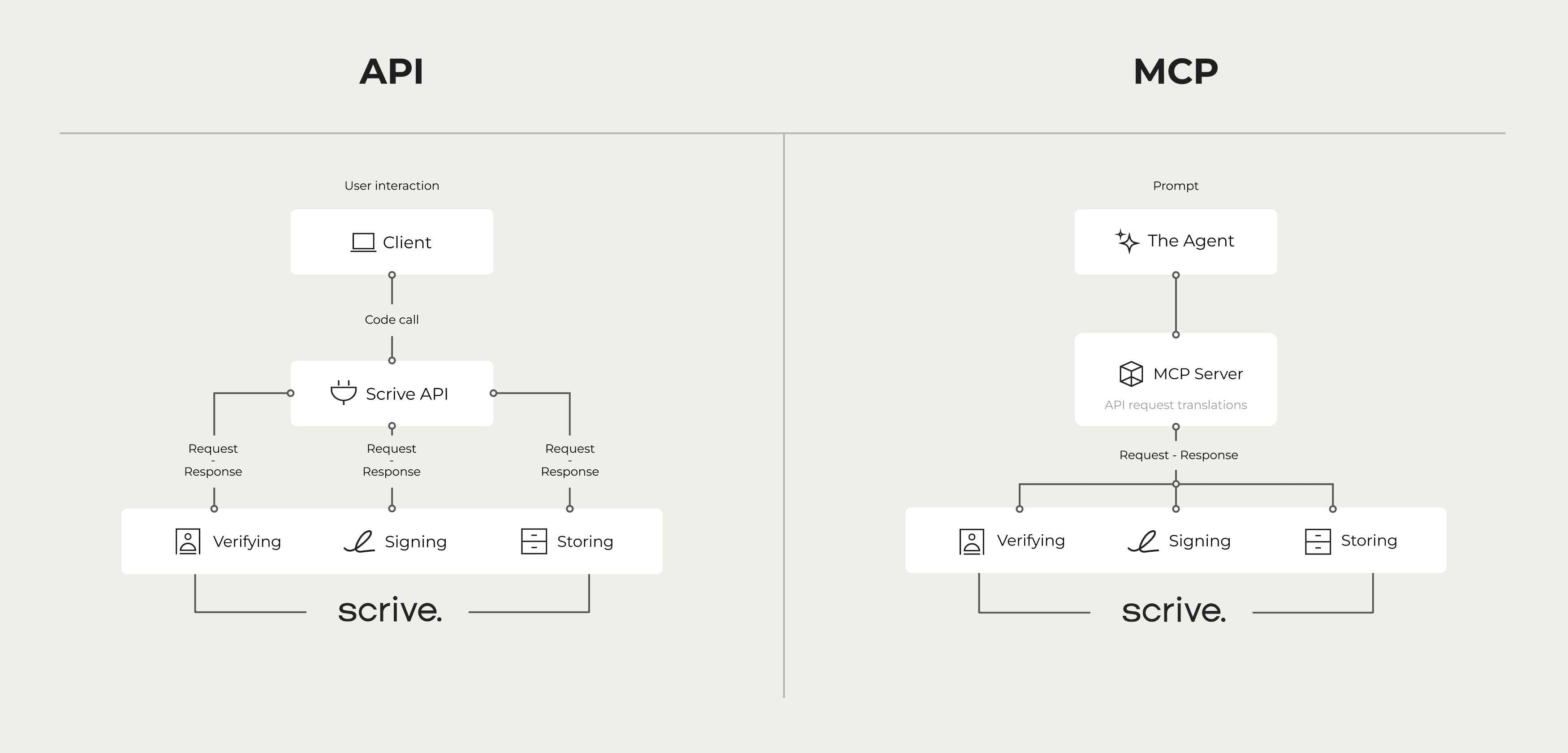
APIs connect software to software. MCP connects AI agents to software. Learn the difference and how Scrive's MCP server brings trusted eSigning to AI.
Read article
A side-by-side comparison of Scrive and DocuSign, using published G2 satisfaction scores. Sources and dates linked.
Read article