scrive logo
Try for free

Age verification should prove eligibility, not expose identity

Compliance, eID

Posted by Jon-Thor Sigurleifsson

For years, online age verification relied on self-declared confirmation. Users simply clicked a button confirming they were above a required age threshold. That approach is rapidly disappearing as regulators, platforms and consumers demand stronger digital trust and more reliable compliance processes.

Across Europe, businesses operating in regulated industries are facing increasing pressure to implement secure and verifiable age controls. Online gambling platforms, alcohol and tobacco retailers, digital media services and delivery providers are all seeing stronger expectations around digital age verification. At the same time, organisations are facing a second challenge: reducing unnecessary exposure to sensitive personal data.

This is creating a fundamental shift in how businesses think about digital identity verification. The question is no longer simply “How do we identify a user?”, the real question is “How do we verify only the information we actually need?”

Why traditional age verification methods create compliance challenges

Many existing age verification systems still rely on collecting more identity information than businesses require for the transaction itself.

Document-based verification methods often involve processing:

  • full names
  • dates of birth
  • identity document images
  • national identity numbers
  • biometric information

While these approaches may successfully verify age, they also create additional obligations around data storage, access management, retention policies, breach exposure, audit requirements and GDPR compliance. This creates a growing tension for businesses operating digital services with requirements to verify age.

A retailer selling age-restricted products usually does not need a customer’s full identity profile. In many cases, the business only needs confirmation that the customer is above a required age threshold such as 16, 18 or 21.

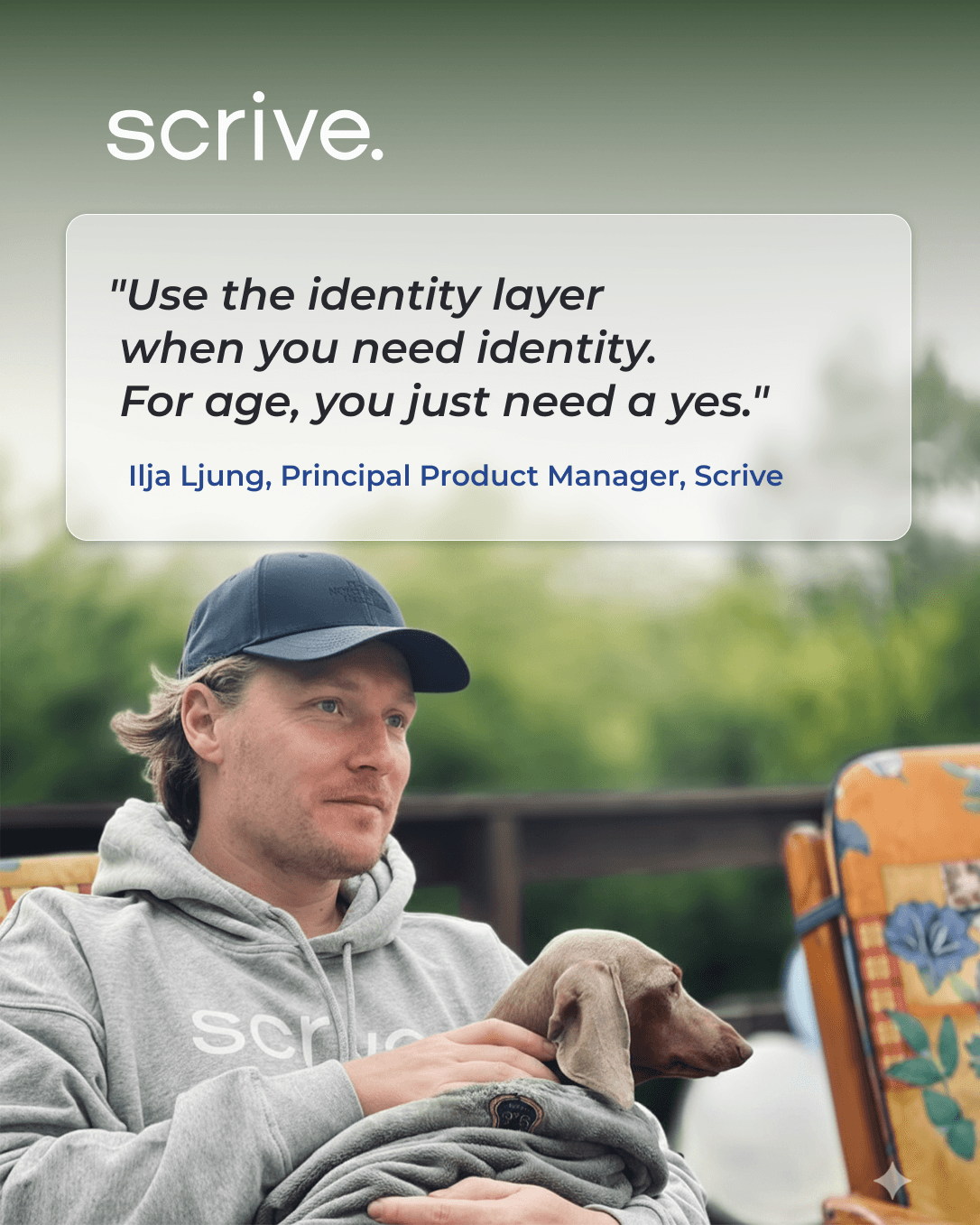
The question has changed. It’s no longer “How do we identify this user?” It’s “How do we verify only what we actually need, and nothing else?””
Ilja Ljung – Principal Product Manager, Scrive

Under GDPR’s principle of data minimisation, organisations are encouraged to limit personal data collection to what is necessary for a specific purpose. As a result, many businesses are now reassessing whether traditional document-heavy verification approaches are proportionate to the actual requirement.

Common concerns of EU businesses around compliance challenges related to document-based age verification methods include excessive personal data handling, operational complexity and onboarding friction.

How Scrive approaches age verification differently

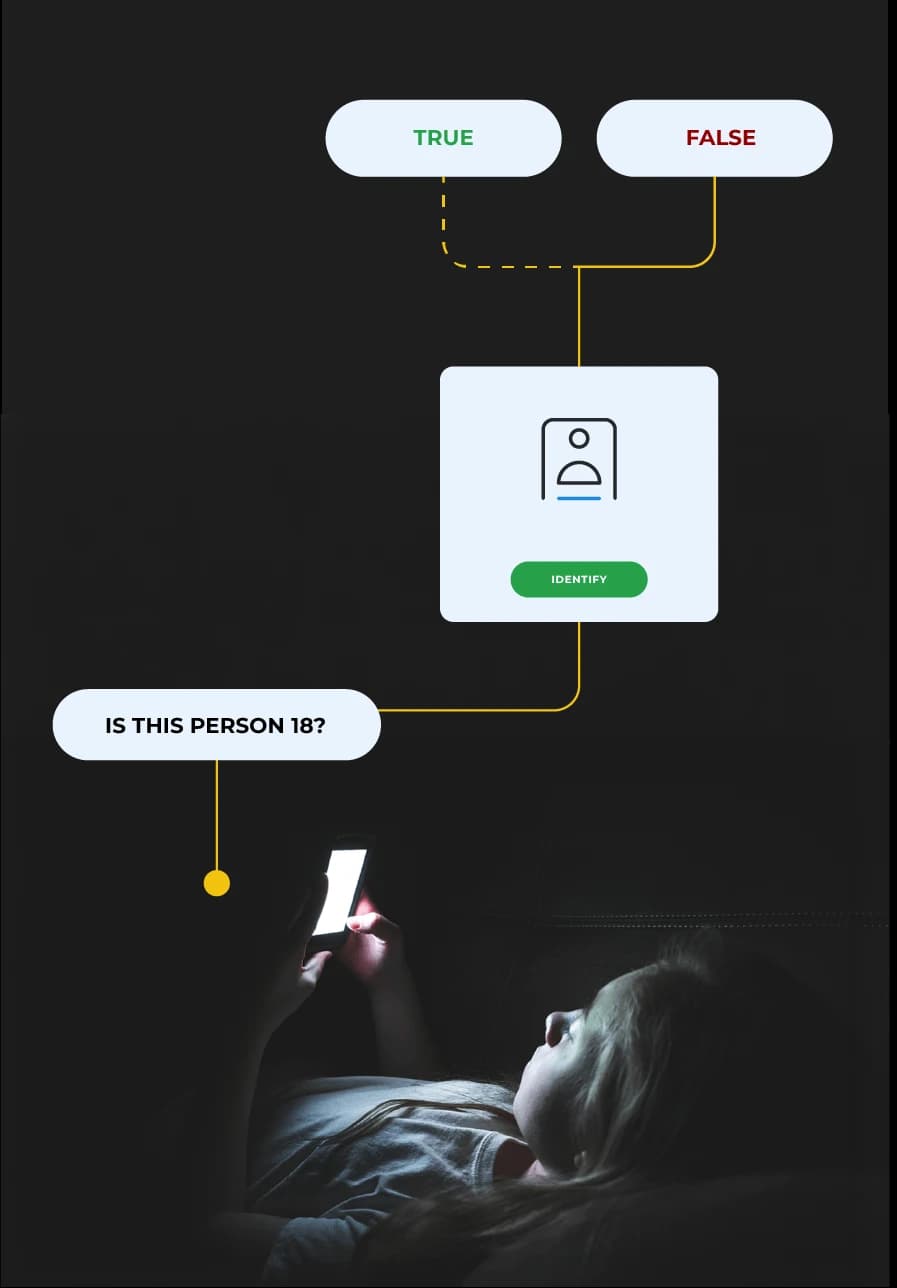
Scrive eID Hub’s new Age Verification endpoint is designed around privacy-first verification and GDPR data minimisation. Instead of returning full identity information, the endpoint verifies whether a user meets a configurable age threshold and returns only a simple boolean response of either true or false.

The business receives confirmation that the user is above the required threshold without needing to process unnecessary personal data such as dates of birth or full identity attributes. This approach helps organisations reduce exposure to Personally Identifiable Information (PII) while still supporting strong and reliable age verification.

The verification process reuses trusted digital identity methods already connected through Scrive eID Hub, including BankID, MitID, Freja and more European eIDs and identity verification methods

Because users authenticate through familiar identity flows they already trust, businesses can implement stronger age verification without introducing additional onboarding friction or unfamiliar user experiences.


Why reusable eIDs matter for user experience

One of the biggest challenges in digital age verification is balancing compliance requirements with conversion and usability. Many document-based or biometric verification flows introduce additional onboarding steps that can increase abandonment rates and negatively affect customer experience. Asking users to upload identity documents or perform facial scans often creates friction, particularly in high-conversion digital environments such as gaming, e-commerce or streaming platforms.

Scrive eID Hub takes a different approach by reusing trusted eIDs that millions of European users already use in their daily digital interactions. This allows businesses to implement age verification within authentication flows users already recognise and trust. The result is a lower-friction verification process that supports both compliance and conversion-focused onboarding.

Where a national eID isn’t available, or where you need document-grade verification, the same endpoint runs on Onfido instead. You match the method to the market and to the risk, without changing how you read the result or how much sensitive data you take on.

The shift toward attribute-based verification

Age verification is part of a broader evolution happening across digital identity infrastructure in Europe.
Historically, digital identity systems focused on exposing full identity information during online interactions. Increasingly, however, businesses and regulators are moving toward attribute-based verification models where organisations verify only the specific attribute required for a transaction. This approach reduces unnecessary personal data exposure while still enabling trusted digital interactions.

The old model exposed full identity in every interaction. The new one verifies only the specific attribute a transaction needs. Less exposure, same trust.
Ilja Ljung – Principal Product Manager, Scrive

As European digital identity ecosystems continue evolving through initiatives such as EU Digital Identity Wallets and broader cross-border interoperability frameworks, minimal-disclosure verification models are expected to become increasingly important.
For many businesses, this shift is not only about compliance but rather about reducing operational risk and limiting the long-term liability associated with handling sensitive identity data.

So if you want to know how Scrive eID Hub’s Age Verification endpoint can support this new reality, get in touch today.

Related articles