Europe’s digital identity landscape is changing. By 24 December 2026, every EU Member State must provide at least one European Digital Identity Wallet (EUDI Wallet), and by 24 December 2027, certain private-sector organisations will be required to accept it when users choose to use it.
But while the regulatory direction is clear, national readiness varies greatly. For businesses, preparation starts with understanding the differences between markets and making room for new identification methods alongside existing ones.
Where do the countries stand right now?
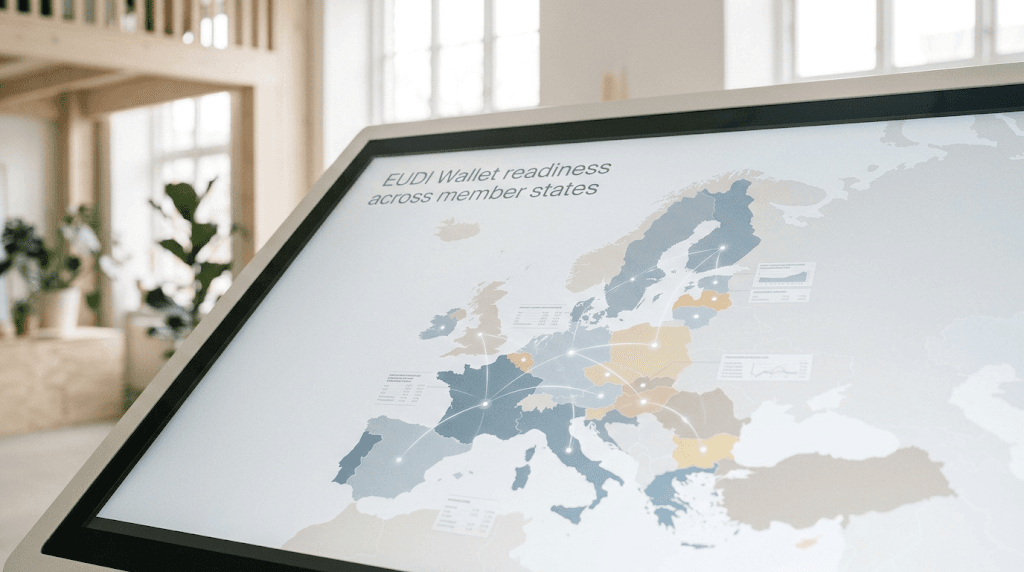
The rollout of EUDI Wallets is progressing across Europe, but not all countries are moving at the same pace. To keep track of the latest developments, you can explore Scrive’s EUDI Wallet tracker, featuring a regularly updated map of Europe that shows how each country is progressing.
The examples below highlight the progress made across selected countries as of November 2026. With new launches and pilots emerging, the European landscape continues to evolve.
- Germany, d-you: Launch planned for 2 January 2027, with sandbox access available to relying parties.
- Denmark, AltID: Live since June 2026 for age and identity verification, but without full EUDI Wallet functionality.
- Poland, mObywatel: Sandbox available by application; pilot planned for the end of 2026.
- France, France Identité: Production app available, with sandbox access and relying-party testing underway.
- Netherlands, NL Wallet: Expected in 2027, with technical arrangements still to be clarified.
- Italy, IT-Wallet: Available through the IO app since December 2024; private-sector access and technical requirements still need clarification.
It’s important to be aware that a wallet launch does not necessarily mean full functionality or completion of all certification requirements. Readiness therefore depends on more than launch dates alone.
Next steps for businesses
The initial rollout will be a gradual transition, not an overnight switch. National eIDs and bank IDs will remain important as wallet adoption grows.
For now, businesses can prepare by focusing on three areas:
1. Test early. Use available sandboxes to validate integrations and identify technical dependencies before production deadlines.
2. Plan for onboarding. Relying parties may need national registration, access certificates and technical configuration before a wallet can share data with their service. Requirements vary by country.
3. Support multiple identification methods. Keep existing authentication options available while introducing EUDI Wallets as they become ready. A flexible approach helps accommodate different users and national timelines.
Preparing for what’s ahead with Scrive
Scrive is preparing eID Hub to support the transition to EUDI wallets. Customers can already integrate with the framework and test sandbox-ready wallets through the eID Hub API at no cost.
From January 2027, Scrive plans to support the production acceptance of wallets that are ready at launch, including support for relying-party onboarding. Qualified electronic signatures with Germany’s d-you wallet are planned for Q1 2027, with additional wallets and use cases to follow.
By integrating once and adding supported wallets as they become available, businesses can prepare for the new framework while continuing to support the identification methods their customers already use.
Ready to get started? Contact Scrive to gain sandbox access and to stay up to date with the latest market developments.