scrive logo
Try for free

Is your business ready to trust AI agents?

Posted by Jon-Thor Sigurleifsson

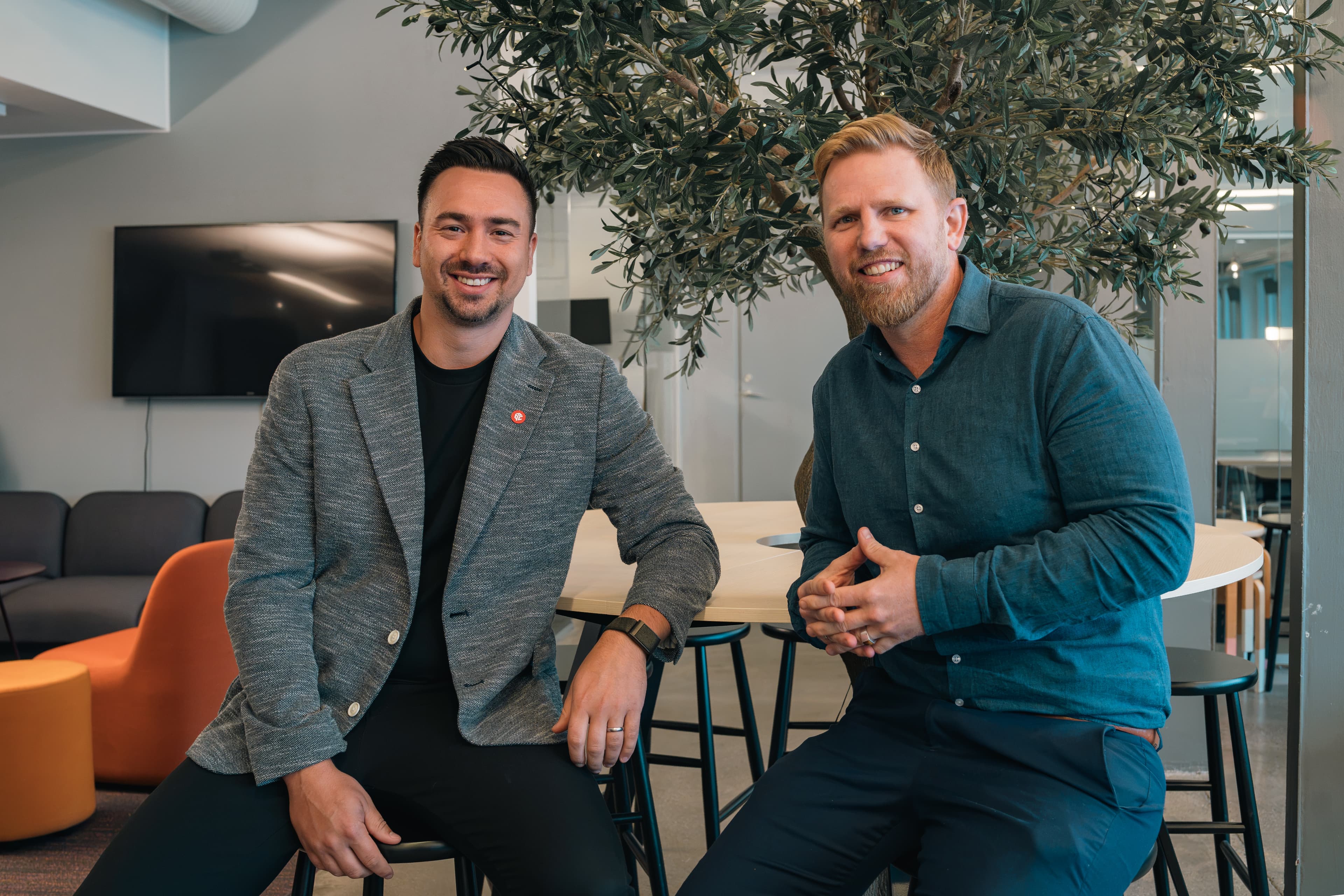
CEO of AQC Behrooz Mirahmadi sits with Scrive CRO Viktor Wrede in Scrive's Stockholm office

There is an important distinction between asking AI for an answer to a question and asking it to do something on your behalf.

Most businesses already encounter the first on a daily basis. Employees use AI to summarise documents, analyse information, draft emails and help with research. The second is more consequential but also a fast-growing trend that we need to be keenly aware of.

An AI agent that can interact with other systems can potentially create documents, update records, initiate processes, contact customers and complete tasks without a person carrying out every individual step. That creates an obvious opportunity for businesses to remove repetitive work and make processes more efficient. It also raises a less obvious question: how much autonomy are we comfortable giving these systems and what needs to be in place before we can rely on them?

This is where the conversation about AI changes as the challenge is no longer simply whether the technology works but whether it can work within the requirements of a real organisation. In use cases where data has to be handled appropriately, actions need to be attributable and certain decisions still require human judgement. This is where having the right partner at your side can make all the difference, which is where Scrive and AQC are collaborating to bring a layer of trust and security to AI transformation projects.

“It’s only when AI moves from experimentation to production that the real challenges become visible. Technology is rarely the hardest part – it’s about trust, accountability, data, and making AI work in the real business.”

Behrooz Mirahmadi, Group CEO at AQC

AQC works with organisations on AI transformation, and that distinction between experimentation and production is an important one. A successful demonstration can show that an agent is capable of completing a task. A production workflow has to account for everything surrounding that task: the data it can access, the systems it can interact with, the decisions it can make, the exceptions it needs to handle and the people who remain responsible for the outcome.

AQC also helps organisations bridge that gap by combining AI expertise with deep experience in system development, data, cloud, integrations and enterprise architecture, turning promising AI use cases into secure, scalable and operational solutions.

What happens when your user isn’t human?

There is another change happening alongside this that could have significant implications for software companies.

For years, we have thought about software primarily through its interface. A customer visits a website, an employee opens an application or a user moves through a series of screens to complete a task. A huge amount of product development has consequently focused on making those experiences easier and more intuitive.

AI agents introduce another way of interacting with software.

A person might no longer need to open an e-signature platform, upload an agreement, add recipients and send it manually. They could instead ask an AI assistant to prepare an agreement and start the signing process as part of a larger workflow. The interface has not necessarily disappeared. It has simply moved to another layer.

For software companies, this is not an entirely new challenge. Of course this consideration has been in place via API’s and integrations before but the growing usage of AI agents means that the quality of the interface may become an even smaller consideration over time. Their underlying capabilities need to be accessible to the systems that increasingly sit between people and the software they use. That’s not to say we should prioritise optimising for agents over people but this still could change the way businesses think about SaaS.

A product does not necessarily need to be the place where a user performs a task in order to be valuable. It can provide a capability that another system calls when that capability is needed and that’s particularly relevant for services where trust is part of the outcome.

An e-signature is not valuable because someone knows how to navigate an e-signature interface. It is valuable because the right people can sign an agreement securely and the organisation can rely on the resulting record. Identity verification works in much the same way. The interface is a means of accessing the service, rather than the service’s fundamental value.

If AI agents increasingly orchestrate business processes, those underlying capabilities need to be available without compromising the controls that make them trustworthy.

Trust needs to survive the automation

This is where agentic workflows become more interesting than simple automation.

When a person completes a process themselves, there is usually a visible chain of actions. They select the document, choose the recipient, review the information and press send. If something goes wrong, there is a person whose actions can be examined and a process that can be retraced.

An agent can perform the same sequence much faster and with less manual effort. But the organisation still needs to understand what happened.

Who authorised the action? What was the agent permitted to access? Which information did it use? What instructions did it receive? Was a human involved at the appropriate point? Can the organisation demonstrate the sequence afterwards?

These questions are not arguments against automation but rather requirements for making automation useful in the first place.

“I don't see trust as something that clashes with the agentic AI revolution we’re witnessing in real time. It's part of the foundation and the opportunity for companies like ours to build that foundation is enormous.”

Viktor Wrede, CCO at Scrive,

Trust is sometimes treated as something that needs to be added after the technology has been developed, perhaps through policies, approvals or additional checks. In agentic workflows, it needs to be considered much earlier.

The question is not simply whether an agent can perform a particular action. It is whether the organisation can give it the appropriate authority to perform that action, and whether there is enough evidence around the process to understand and rely on the result.

MCP Scrive

Connecting AI to trust services

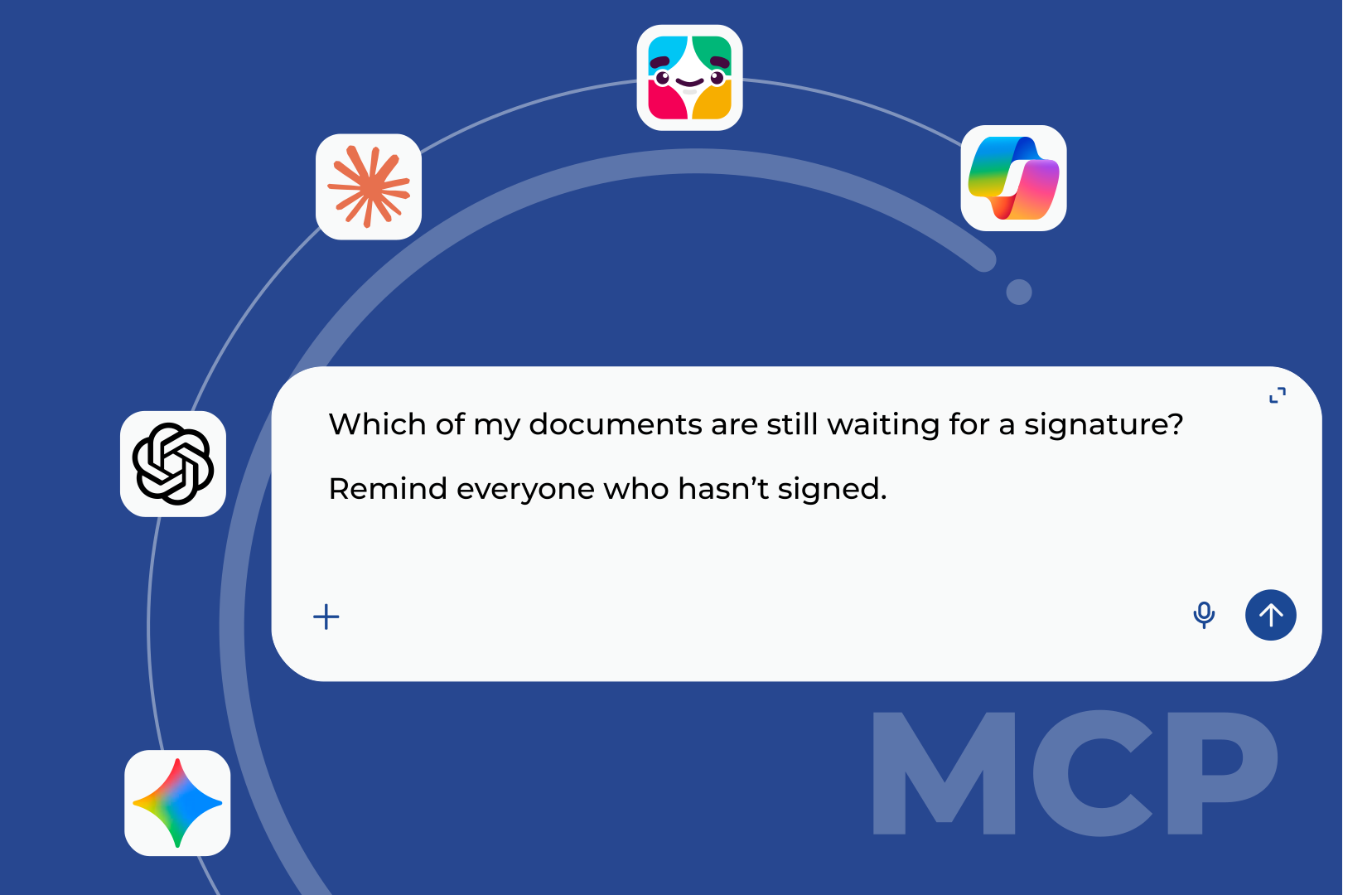
This is one of the reasons technologies such as the Model Context Protocol, or MCP, are becoming increasingly relevant to businesses.

MCP provides a standardised way for AI applications to connect with external tools and services. Rather than keeping AI confined to generating or interpreting information, it allows an AI environment to interact with capabilities outside itself. That opens up an interesting possibility for existing business software. Instead of forcing every AI-driven workflow back through a traditional application interface, individual capabilities can be made available to the systems orchestrating the work.

Scrive is exploring this with its open-source MCP Server, which allows AI environments such as Claude to interact with Scrive’s e-signature, identity and document capabilities.


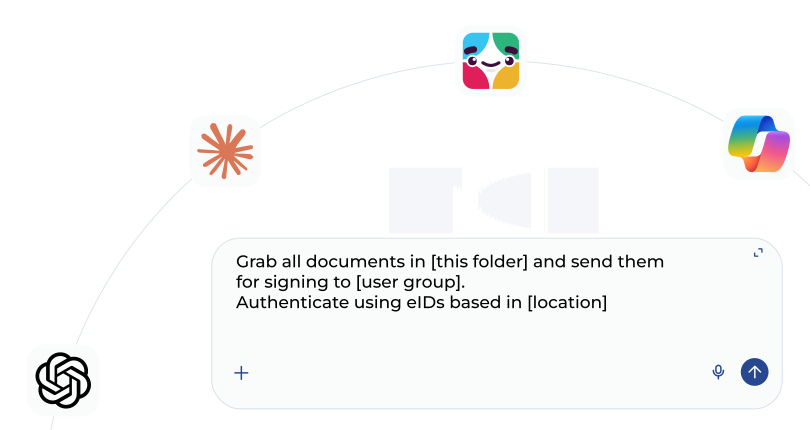
Consider a relatively straightforward example. An employee could ask an AI assistant to prepare an agreement for a new customer. The agent could help create the document, identify the required recipients and initiate the signing process. Depending on the workflow, it could also interact with identity verification services and provide information about the status of the agreement.

The important point is not that an AI can now perform these individual tasks. The interesting part is that they can become components of a larger workflow without requiring someone to manually move between separate applications.

For Scrive, MCP is therefore less about creating another way to access the product and more about exploring where trusted e-signature and identity capabilities belong when software is increasingly being orchestrated by AI.
Autonomy needs boundaries

None of this means that businesses should hand every workflow over to an agent. There will be processes where automation makes obvious sense, particularly where the work is repetitive, well understood and relatively low risk. There will also be situations where human judgement remains essential, particularly when a decision has legal, financial or reputational consequences. 

Working out where that boundary belongs requires businesses to examine their processes rather than simply asking where they can add AI. What should an agent be allowed to do independently? Which actions require approval? What information should it have access to? How should exceptions be handled? Who remains accountable for the outcome?

Those decisions are as much about organisational design as they are about technology.

This is also why partnerships between AI transformation specialists and technology providers will become increasingly important. Organisations need to understand both sides of the problem: how to redesign a process around new capabilities, and how to make sure the systems involved can support that process securely and reliably.

AQC and Scrive approach the problem from different directions, but the underlying question is similar. How do you take something that works in an AI demonstration and make it useful in a business where people, processes, data and accountability all matter?

The opportunity goes beyond the interface

The shift towards agentic workflows could eventually change what customers expect from software. A user cares less about which application they need to open and more about whether the outcome they want can be achieved reliably. They might never consciously interact with the e-signature or identity platform involved in a process. That does not make those services less important. In some cases, it makes their underlying capabilities more important, because they need to work correctly as part of a process that the user does not directly control step by step.

For software companies, this creates a different kind of product challenge. The interface still matters, but it is no longer the whole experience. Products also need to expose their capabilities in ways that other systems can use safely, while retaining the security, identity and accountability that customers depend on.

For businesses adopting AI, meanwhile, the focus needs to extend beyond what an agent can do. The more useful question is whether the organisation is ready for the agent to do it. That means considering authority alongside capability, accountability alongside automation and trust alongside efficiency.

AI agents are becoming increasingly capable of participating in real business processes. The organisations that benefit from them will not necessarily be the ones that automate the most. They will be the ones that understand where autonomy creates value, where human involvement remains important, and what needs to surround an AI agent before it can be trusted to act.

AI is evolving quickly. Is your business ready to hand over the keys?

Want to learn more about Scrive and AQC’s collaboration? Read more here.

Related articles